
Utah Safari
Black Bear: February 18, 2025
Big Game: April 24, 2025
Antlerless & Points Only: June 18, 2025
Swan & Grouse: Mid July, 2025
Youth & Archery General Elk Permits on Sale: July 8, 2025
Any-Bull General Elk Permits on Sale: July 10, 2025
Spike General Elk Permits Available: July 17, 2025
Private-lands Cow Elk Permits Available: July 29, 2025
Sportsman's Resident Raffle: November 6, 2025
Spring Turkey: December 27, 2025
Black Bear: February 18, 2025
Big Game: April 24, 2025
Antlerless & Points Only: June 18, 2025
Swan & Grouse: Mid July, 2025
Youth & Archery General Elk Permits on Sale: July 8, 2025
Any-Bull General Elk Permits on Sale: July 10, 2025
Spike General Elk Permits Available: July 17, 2025
Private-lands Cow Elk Permits Available: July 29, 2025
Sportsman's Resident Raffle: November 6, 2025
Spring Turkey: December 27, 2025
| UP-FRONT FEES | |
| Non-Resident Hunting License | $147.17 |
| Youth (<18) Non-Resident Hunting License | $44.97 |
| Application Fee Per Species | $21.46 |
| POST DRAW FEES (IF SUCCESSFUL)* | |
| Desert Bighorn Sheep | $4,075.74 |
| Rocky Mountain Bighorn Sheep | $4,075.74 |
| Moose | $3,564.74 |
| Rocky Mountain Goat | $3,564.74 |
| Bison | $4,946.48 |
| Limited-Entry Elk | $1,992.90 |
| Multiseason Limited-Entry Elk | $2,713.41 |
| General Bull/Spike Elk (Adult or Youth) | $867.68 |
| Multiseason General Spike Elk (Adult) | $1282.61 |
| Youth Only General Elk | $765.48 |
| Premium Limited-Entry Buck Deer | $1,428.76 |
| Multiseason Premium Limited-Entry Buck Deer | $2,381.26 |
| Limited-Entry and Limited-Entry Management Buck Deer | $1,093.54 |
| Multiseason Limited-Entry Buck Deer | $2,309.72 |
| General Deer | $612.18 |
| General Deer Dedicated Hunter Program (Adult) | $1,275.46 |
| General Deer Dedicated Hunter Program (Youth) | $935.13 |
| General Deer Dedicated Hunter Program - Per Hour | $40.88 |
| Antelope | $583.56 |
| Rocky Mountain Bighorn Sheep (Ewe) | $2,146.20 |
| Cow Moose | $2,248.40 |
| Cow Elk | $663.28 |
| Doe Deer | $241.19 |
| Doe Antelope | $241.19 |
| Black Bear | $613.20 |
| Multiseason Black Bear | $908.56 |
| Turkey | $178.85 |
| All pricing includes the 2.2% processing fee. *Current as of September 2025 |
|
| UP-FRONT FEES | |
| Hunting License | $40.88 |
| Youth Hunting License (< 18 Years Old) | $16.35 |
| Application Fee Per Species | $10.22 |
| POST DRAW FEES (IF SUCCESSFUL)* | |
| Desert Bighorn Sheep | $576.41 |
| Rocky Mountain Bighorn Sheep | $576.41 |
| Moose | $463.99 |
| Mountain Goat | $463.99 |
| Bison | $470.12 |
| Limited-Entry Elk | $320.91 |
| Multiseason Limited-Entry Elk | $574.41 |
| General Bull/Spike Elk (Adult or Youth) | $57.23 |
| Multiseason General Spike Elk (Adult) | $204.40 |
| Youth Only General Elk | $51.10 |
| Premium Limited-Entry Buck Deer | $189.07 |
| Multiseason Premium Limited-Entry Buck Deer | $343.39 |
| Limited-Entry and Limited-Entry Management Buck Deer | $96.07 |
| Multiseason Limited-Entry Buck Deer | $173.74 |
| General Deer | $47.01 |
| General Deer Dedicated Hunter Program (Adult) | $219.73 |
| General Deer Dedicated Hunter Program (Youth) | $122.64 |
| General Deer Dedicated Hunter Program - Per Hour | $40.88 |
| Antelope | $64.39 |
| Rocky Mountain Bighorn Sheep (Ewe) | $112.42 |
| Cow Moose | $254.48 |
| Cow Elk | $58.20 |
| Doe Deer | $37.20 |
| Doe Antelope | $35.77 |
| Black Bear | $95.05 |
| Multiseason Black Bear | $187.03 |
| Turkey | $40.88 |
| All pricing includes the 2.2% processing fee *Current as of September 2025 |
|
| MULE DEER (LIMITED ENTRY) | |
| Archery | Aug 16 – Sep 12, 2025 |
| Muzzleloader | Sep 24 – Oct 2, 2025 (varies by unit) |
| Muzzleloader (Late hunt on General Units) | Oct 29 - Nov 6, 2025 |
| Rifle | Oct 18 – Oct 26, 2025 (varies by unit) |
| HAMMS | Nov 8 - Nov 30, 2025 |
| MULE DEER (GENERAL) | |
| Archery | Sep 2 – Sep 30, 2025 |
| Muzzleloader | Sep 24 - Oct 2, 2025 |
| Rifle (1st season) | Oct 8 - Oct 12, 2025 |
| Rifle (2nd season) | Oct 18 - Oct 26, 2025 |
| PRONGHORN | |
| Archery | Aug 16 – Sep 12, 2025 |
| Muzzleloader | Sep 24 – Oct 2, 2025 |
| Rifle | Sep 13 – Sep 21, 2025 |
| ELK (GENERAL) | |
| Archery (Spike Units) | Aug 16 – Sep 5, 2025 |
| Archery (Any Bull Units) | Aug 16 – Sep 17, 2025 |
| Rifle (Spike Units) | Oct 4 – Oct 16, 2025 |
| Rifle (Any Bull Units) | Oct 4 – Oct 10, 2025 (1st season) |
| Rifle (Any Bull Units) | Oct 11 – Oct 17, 2025 (2nd season) |
| Muzzleloader (Any Bull Units) | Oct 29 – Nov 6, 2025 |
| ELK (LIMITED) | |
| Archery (Early) | Aug 16 – Sep 16, 2025 |
| Archery (Late) | Nov 29 – Dec 14, 2025 |
| Muzzleloader | Sep 22 – Oct 3, 2025 |
| Elk Rifle (Early) | Sep 17 – Sep 21, 2025 |
| Rifle (Mid) | Oct 4 – Oct 16, 2025 |
| Rifle (Late) | Nov 8 – Nov 16, 2025 |
| BISON | |
| Any Legal Weapon | Nov, 2025 – Jan, 2026 (varies by unit) |
| DESERT BIGHORN SHEEP | |
| Any Legal Weapon | Sep 13 – Nov 10, 2025 |
| ROCKY MOUNTAIN BIGHORN SHEEP | |
| Any Legal Weapon | Oct – Nov, 2025 (varies by unit) |
| MOUNTAIN GOAT | |
| Any Legal Weapon | Sep – Nov, 2025 (varies by unit) |
| SHIRAS MOOSE | |
| Any Legal Weapon | Sep 13 – Oct 31, 2025 |
| YEAR | ELK, DEER, ANTELOPE & ONCE-IN-A-LIFETIMES | BLACK BEAR | ANTLERLESS |
|---|---|---|---|
| 2025 | May 13 (emails & online) | February 27 | July 2 |
| 2024 | May 14 (emails & online) | February 28 | July 5 |
| 2023 | May 25 (emails) | February 28 | July 6 |
| 2022 | May 13 (emails) | March 2 | June 28 |
| 2021 | May 11 (emails) | March 2 | June 29 |
| 2020 | May 15 (emails) | June 30 | |
| 2019 | May 13 (emails) | ||
| 2018 | May 11 |
The 2025 Utah Big Game Application Guidebook is available online and at Division offices. You may apply in Utah by visiting www.wildlife.utah.gov, clicking on the Hunting tab, and going to the “Permits and Drawings” section. You may also apply via telephone by calling any Division of Wildlife Resources office. The application timeframe for all big game species is March 20-April 24, 2025. Draw results will be posted by May 15th.
Non-residents can apply for all species, including limited-entry deer and general season deer. However, you may not apply for a permit and a bonus point for the same species.
Up to four hunters can apply as a group for limited-entry deer, elk, and antelope hunts and general season deer hunts. Group applications are not permitted for management buck or once-in-a-lifetime (OIL) species. Non-residents and residents can apply together in a group, but if there are no non-resident permits available for your selected hunts, the application will not be considered.
You must have a valid Utah hunting license to apply, and you can purchase one at the time you apply. Hunting licenses are valid for 365 days from the date of purchase. If you time your applications correctly, you could purchase one license and apply for two years. If you draw a permit, you do not need a current hunting license to hunt, but you will need one to apply. If you wish to modify your application, you may now do so online prior to the deadline. If you plan to apply for bonus or preference points only, that period will be during the antlerless application timeline in June.
By Huntin' Fool
By Huntin' Fool
THE ADVISOR SERIES
Utah issues 50% of the limited-entry and once-in-a-lifetime permits to applicants with the maximum number of points who applied for that hunt. The other 50% are awarded randomly to the rest of the applicants who did not receive a bonus permit. Applicants in the random draw will have an extra chance in the draw for each bonus point accumulated over the years. The caveat is that if there is an odd number of permits available in the draw, the majority of permits will be awarded in the bonus draw to the maximum point holders. For example, if five permits are available, three of those permits will be issued in the bonus draw to the applicants with the most points and the remaining two permits will be issued in the random draw. Utah issues 10% of their draw permits to non-residents.
The waiting period for successful applicants for limited-entry deer is five years. The waiting period for successful applicants for limited-entry antelope is two years. The waiting period for limited-entry elk is five years. Bighorn sheep, bull moose, mountain goat, and bison are once-in-a-lifetime permits, regardless of harvest success.
General deer is a preference draw in which permits are awarded to max point applicants. The draw is conducted in the following sequence: deer (limited-entry), elk (limited-entry), antelope (limited-entry), OIL species (sheep, moose, mountain goat, and bison), youth general season deer, general season deer, and youth any bull elk. Understanding the order of the draw is critical. Due to the order in which permits are drawn, you won’t be included in the drawing for a once-in-a-lifetime permit if you draw any of the following: limited-entry buck deer, bull elk, or buck antelope. The reason for this is that Utah does not allow you to possess two limited-entry draw tags at the same time. Also, for deer, you cannot draw both a limited-entry tag and a general season tag. If you draw a limited-entry deer tag, your general deer application will not be considered, but you will still receive a preference point.
Draw results will be emailed out on or before May 15, 2025. You can also find your draw results by logging into your account at www.utah-hunt.com where you applied or by calling 800-221-0659.
$199 BILLED ANNUALLY
Unlimited One-On-One hunt consultations and everything you need to prep like a pro and hunt like a fool.
$48 BILLED ANNUALLY
Access our digital research tools, draw more tags, and hunt with better information.
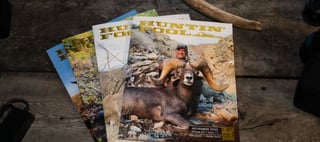
Our members experience improved hunting opportunities as a direct result of the Huntin' Fool magazine. We are the only publication that breaks more than 20 states' hunting regulations and draw systems into bite-sized chunks for our members.
Adults must purchase a $120 non-refundable non-resident hunting license to apply. The youth license is $34. The application fees are non-refundable and cost $16 for each species you apply for. You will not be charged the full cost of the permit unless you are successful in the draw.
Utah accepts American Express, Discover, MasterCard, and Visa credit or debit cards. Credit cards used to apply in the big game draw must be valid through June 2025. To change the credit or debit card associated with your application, call 800-221-0659 or update the credit card information at www.utah-hunt.com.
Advisor Articles from Our Magazine on Utah Application and Hunting Strategy
If you were born after December 31, 1965, you must have completed a hunter education course before you can apply for or obtain a hunting license or a big game permit. Proof is required in the field.
Applicants must be 12 years old by December 31, 2025 to apply for and hunt in Utah. If you meet the age and hunter education requirements, you can apply for any big game permits, including limited-entry and once-in-a-lifetime permits. A person under 16 years of age must be accompanied by a legal guardian or responsible person who is 21 or older.
Utah has a bonus point system for limited-entry deer, elk, antelope, bison, mountain goat, moose, and both bighorn sheep species. Bonus points are species specific and are not transferable between species. The bonus point system is designed to increase the chances of drawing a permit. Every year that you apply and are unsuccessful, you will receive a bonus point for that species. You may also purchase points only. In essence, for each point you have, you are entered one additional time into the drawing.
Utah has a preference point system for general season deer. You are awarded a point for every year you apply and are unsuccessful in the draw, or you may purchase points only. This is a true preference point system where the applicants with the most points get the permits. If you draw any of your hunt choices, first through fifth, you will lose your preference points. In addition, the Division will only evaluate the first choice of max point holders before moving to applicants with the next highest point levels and so on. After everyone's first choice is considered, they will move to the second choice and will continue in this order all the way through the fifth choice.
Group applicants will have their points totaled, averaged, and rounded down to the whole number. A group application will be evaluated as a single application in the drawing. It is imperative that you take notice of the number of tags available for maximum point holders before applying. If there are only one or two tags available, do not apply with three or four individuals as there is no way to draw.
The point totals listed for each draw species are 2025 point totals of all applicants who participated in the 2024 draw or purchased a point for that species. We have subtracted all successful applicants from their respective point field and moved those who were unsuccessful and those who purchased a point up to the next point level to give Huntin’ Fool members an accurate account of how many applicants are at each point level going into the 2025 draw. This does not take into account any successful applicants who turned their tag back in and had their points reinstated.
By Huntin' Fool
By Huntin' Fool
By Huntin' Fool
By Huntin' Fool
By Huntin' Fool
By Huntin' Fool
THE ADVISOR SERIES
The draw odds we list are split into two categories – random (without respect to bonus points) and number of points needed to be considered in the preference draw in 2024. The random odds we list are computed by subtracting the permits given to people with the most points and then dividing the number of remaining applicants by the number of remaining permits. The number of points needed to draw column depicts the number of points it took last year to be considered in the preference draw. If there is only one permit available for a particular hunt, it will be issued randomly and there will not be a max point permit for that hunt. The random draw odds do not take into account how many bonus points any of the applicants have, thus they are not the true odds of drawing. This is to give you a relative idea of how hard a unit will be to draw. Each individual’s odds of drawing are different, depending on their number of bonus points accumulated.
Eligible youth must turn 12 years old by December 31, 2025 and must be 17 years of age or younger on July 31st to apply as a youth for all big game permits. General season any bull elk permits (any legal weapon, muzzleloader, and multi-season) will be unlimited for youth hunters.
Twenty percent of Utah's general season buck deer permits are allocated to youth in the drawing. Youth who obtain a general season any legal weapon deer permit may also hunt during the archery and muzzleloader hunts. For youth hunters who are unsuccessful in the drawings, additional over-the-counter youth archery permits will be available at 8:00 a.m. on July 8th at www.wildlife.utah.gov and from license agents and Division offices.
Youth can apply for a youth any bull permit. The youth any bull hunt takes place September 13-23 on any bull units only. This season is prior to the rifle general any bull hunt and is designed to give youth who draw a permit the chance to hunt with a rifle during the rut. Be aware, any bull units may be limited in the amount of public land, access, or elk populations.
Up to four youth can apply together for youth any bull elk permits. For general season deer, up to four youth can apply to hunt together in a youth-only group application. It’s important to note that if you want a youth to be considered for the 20% of general deer tags set aside for youth, do not apply them in a group with an adult.
Utah has a mentor program for youth ages 12-17 which allows a qualifying adult to mentor a youth during a hunt by sharing a big game permit. The mentor can be a non-resident, but they must accompany the minor. Both may carry weapons into the field, but only one animal may be harvested. For more information regarding the mentor program for youth, go to www.wildlife.utah.gov/mentoring.
Utah does not allow archers to use electronic rangefinding devices attached to their bows to hunt big game. Archery equipment may be used during any big game hunt, except a muzzleloader hunt, provided that the minimum bow pull is 30 pounds at the draw or the peak, and broadheads must have two or more sharp edges that cannot pass through a 7/8” ring. Expandable broadheads are legal. Draw-lock devices and crossbows are not legal.
Utah no longer allows variable power scopes to be used on muzzleloaders. Muzzleloaders may be equipped with open sights, red dot, or a 1x power scope on muzzleloader-only hunts. Muzzleloaders may be used during any big game hunt, except during archery season. In-line muzzleloaders are legal as well as the use of sabots. Nothing less than .40 caliber muzzleloaders may be used for big game animals. Check the regulations for other restrictions, such as bullet weights.
HAMSS stands for Handgun, Archery, Muzzleloader, Shotgun and Straight-Walled Cartridge hunts. Handguns must not have a barrel over 15” in length, be under 24” in overall length, and not have any fixed, detachable, or collapsible buttstocks. Muzzleloaders can use centerfire primers and loose or pelletized black powder or black powder substitute. None of this equipment can be equipped with a scope of any kind. Straight-walled cartridges must have a minimum bullet diameter of .35 caliber and a minimum case length of at least 1.16 inches may be used. No semi-automatic rifle, scope or other optics, or electronics are allowed.
New for 2025, Utah created a few restricted weapon-only hunts for mule deer. Beaver/West, Boulder/Kaiparowits, and Cache will all be considered as primitive weapon units. The archery definition is the same as the archery definition above. The muzzleloader definition removes the ability to use a shotgun (209) or centerfire primer for ignition. Matchlock, wheellock, and percussion/musket caps are only allowed. The ignition may be fully enclosed. There are no other restrictions on the powder or projectile type. The definition restricts the use of any mounted scope of any kind and no semi-automatic rifles. The Thousand Lakes unit will have the above restrictions but also have bows restricted to single-stringed long bows or recurve bows without pulleys, cables, or cams.
Utah has an extensive conservation permit program. Last year, over 300 conservation permits for a variety of species and hunts were auctioned off to the highest bidder by various conservation organizations. They also have a Statewide Conservation Permit, aka "Governor's tag," for each of Utah's game species. Conservation permits are available to residents and non-residents. It's anticipated that a similar amount will be available this year. For details on which organizations will have what permits and where they will be auctioned, visit our website at www.huntinfool.com/resources/statewide-permits.
Utah raffled off Expo Permits at the Western Hunting Expo in Salt Lake City. There were 200 permits available to apply for by going to https://huntexpo.com. The application cost is $5. In-person validation is required. The Expo dates next year will be February 12-15, 2026.
Utah has two systems in which they issue landowner tags. One system is the CWMU (Cooperative Wildlife Management Unit) program where landowners are given tags only for their property for deer, elk, antelope, and moose. Landowners have liberal seasons and can transfer these tags as desired. In exchange for these tags, landowners must let a certain number of resident hunters (through the draw) hunt on their land. In Utah’s regulations, there is a list of CWMU operators with their respective phone numbers. Residents and non-residents are eligible to purchase hunts from CWMU operators, but non-residents must draw a tag on a CWMU. Check out www.huntinfool.com for several Endorsed Outfitters with hunts using CWMU tags.
The second landowner tag system is where the state issues landowner permits, but the landowners that receive these landowner tags must hunt the entire unit during the prescribed season. To obtain landowner tags and landowner permits, visit our website at www.huntinfool.com/landowner.
Any remaining limited-entry, general season, and youth archery deer permits may be obtained online or at any Division office at 8:00 a.m. MDT on July 8th. If you purchase a general season buck deer permit, you will lose all accrued preference points for that buck deer.
Utah recently passed their wolf management plan which doesn't allow for wolf recovery within the state at the current time. To view this plan, visit https://wildlife.utah.gov/wolf/wolf_management_plan.pdf.
Successful applicants must surrender their permit 30 days prior to the hunt opening in order to have their points reinstated. However, they will not earn a bonus/preference point for that year's application. Utah will refund the cost of the limited-entry and once-in-a-lifetime permit so long as it is turned in 30 days prior to the hunt. If you apply in a group and draw limited-entry permits, all members of the group must surrender their permits at least 30 days before the season starts in order to have their bonus points reinstated. There are no refunds for general season permit surrender. The hunting license and application fees are non-refundable. Utah has a Hunter Mentoring Program which allows an adult to share (not transfer) big game permits with a resident minor.
You must report your hunt information for all big game hunts within 30 days of the end of the hunt. If you don’t meet this requirement, you won’t be allowed to apply the following year. If you didn’t submit your 2024 limited-entry harvest survey questionnaire by the deadline, you can restore your eligibility to apply for a 2025 permit by paying a $50 late fee and filing your report. There is no late fee for not reporting your general season elk and deer in 2024. For more information, call 800-221-0659.
The Division cannot guarantee access to any private land. Utah has a walk-in access program where the Division has leased private land for hunting privileges for public recreation. For more information, go to https://wildlife.utah.gov/fishing/walk-in-access.html or the previously noted Hunt Planner site.
Non-resident owners of ATVs, off-highway motorcycles, or snowmobiles who bring them into Utah must obtain a non-resident permit for their machine. Some states offer reciprocity, meaning there is a mutual agreement between states not to charge non-residents fees. More information can be found at https://stateparks.utah.gov/activities/off-highway-vehicles/non-resident-ohv-permits/.
All OHV operators are required to pass a Utah Off-Highway Vehicle Education Course. This course is online at https://secured.utah.gov/utoutdoordirectory/Forms/Page/utoutdoordirectory/utohvcourse/0 and is free for adults 18 and over. For all youth under 18 years of age, there is an online youth safety course that is required and costs $35. The adult course is valid for the rest of your life once passed.
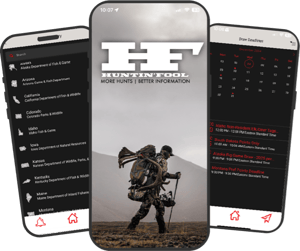
Huntin’ Fool offers a wide variety of services and resources within the hunting space, and the Huntin’ Fool App offers access to them all. Utilizing this app, you will be able to apply for hunts, plan hunts, buy hunts, and win hunts. This app is simple to use and puts the tools you need to go on great hunts right at your fingertips.
Trophy hunting, defined as killing a big game animal solely to take its antlers, hide, or other trophy parts while leaving the carcass behind, is illegal in Colorado. State law considers this a felony offense, and hunters are required to properly tag, utilize, and report their harvests. For certain species like bears, mountain lions, and bobcats, mandatory inspection and sealing of specific parts is also required. While legally licensed hunters can pursue animals for their trophy value, they must comply with all regulations that ensure the full use of the animal and prevent waste.
In Colorado, the general minimum age to hunt big game and mountain lion is 12, though youth can apply for a license at age 11 if they turn 12 before the season ends. Youth ages 12–15 must be accompanied by a qualified mentor while hunting big game, and those under 16 must also be accompanied when hunting mountain lion, turkey (with a youth license), or small game with a youth license. There is no minimum age to hunt turkey as long as hunter education requirements are met. Youth hunters under 18 may purchase reduced-cost licenses, and those meeting education requirements can also choose to buy an adult small-game license, which allows them to hunt without a mentor. All hunters born on or after January 1, 1949, must have a hunter education card.
Be careful using accordions. They are known to shorten pages, yet they come at a higher interaction cost. Accordions are great for FAQs. Here is a UX checklist:
Yes, you can hunt on your own land in Colorado, but you must still follow all applicable hunting laws. This includes having a valid hunting license for the species you're pursuing, completing hunter education if you were born on or after January 1, 1949, and purchasing a Habitat Stamp if you're between ages 18–64. Season dates, bag limits, legal hunting methods, and game management unit regulations still apply on private land. While being the landowner satisfies the permission requirement for private-land-only licenses, you must ensure your land is eligible and within the appropriate hunt unit. Hunting near public roads or highways may also be restricted.
Yes, you can hunt on BLM (Bureau of Land Management) land in Colorado, as it is generally open to public hunting. However, you must have a valid Colorado hunting license and follow all state hunting regulations, including season dates, species rules, and legal methods of take. While BLM land is open to hunting, off-trail game retrieval with motorized vehicles is usually prohibited, and specific rules or access restrictions may apply in certain areas. Hunters are advised to contact the local BLM office for up-to-date maps, regulations, and any closures before heading out.
Yes, you can hunt in National Forests in Colorado. These public lands are generally open to hunting, but you must follow all state hunting regulations, including licensing, season dates, and legal methods of take. Some areas within National Forests may have temporary closures, access restrictions, or special rules, so it’s important to contact the local Forest Service office before your hunt to get up-to-date maps and information. Always confirm the regulations for the specific Game Management Unit (GMU) where you plan to hunt, as many GMUs include portions of National Forest land.
Yes, you can hunt with a suppressor (silencer) in Colorado. Suppressors are legal to own and use for hunting, target shooting, and personal defense. As long as you legally possess a suppressor in compliance with federal regulations, you are allowed to use it while hunting in Colorado, including for big game species like elk and mule deer. Suppressors help reduce noise and recoil, and are increasingly popular among hunters for safety and comfort.
Yes, you can hunt with a crossbow in Colorado, but only under certain conditions. Crossbows are legal for hunting big game and mountain lion **during rifle or associated methods seasons**, not during archery-only seasons. To be legal, a crossbow must have a minimum 125-pound draw weight, a 14-inch draw length, a working safety, and use bolts at least 16 inches long with broadheads that are at least 7/8 inch wide and have two steel cutting edges in the same plane. Crossbows also appear to be allowed for small game, though they cannot be used for archery season big game hunts. The legality of crossbows for turkey hunting is unclear in the available sources, so it’s best to check directly with Colorado Parks and Wildlife for confirmation.
Yes, a non-hunter can accompany a hunter in Colorado under certain conditions. For youth hunters and those using apprentice certificates, a mentor must be present, but the mentor does not have to hunt. Hunters with disabilities may also be accompanied by one or more non-hunters for assistance. In general, non-hunters are allowed to accompany licensed hunters as long as they do not participate in hunting activities and all regulations are followed. However, in areas like State Wildlife Areas (SWAs), non-hunters age 16 or older may need a valid hunting/fishing license or a SWA pass to be present. Always check specific property rules with Colorado Parks and Wildlife before heading out.
Yes, you can carry a pistol while bow hunting in Colorado, but it must be for self-defense only—not for hunting or finishing wounded game. Using a firearm to dispatch an animal shot with a bow is illegal. Open carry is legal, and concealed carry is allowed with a valid Colorado permit (note that not all out-of-state permits are recognized). Handguns are exempt from some transport restrictions, but rifles and bows must be unloaded and cased when transported on off-highway vehicles. Discharging any weapon from or across a public road or within 50 feet of its centerline is prohibited. Always review current Colorado Parks and Wildlife regulations before your hunt.
Yes, you can hunt on Sundays in Colorado. There is no statewide prohibition against Sunday hunting in the regulations. As long as you're hunting during legal hours, within the designated season, and following all other rules for the species and Game Management Unit (GMU), Sunday hunting is allowed. However, some specific properties—like certain State Wildlife Areas—may have their own access or day-use restrictions, so it's important to check the regulations for the exact area where you plan to hunt. Always consult Colorado Parks and Wildlife for the most up-to-date information.
Yes, you can hunt in wilderness areas in Colorado, but you must follow specific regulations. Wilderness areas like Flat Tops, Maroon Bells–Snowmass, Mount Evans, Buffalo Peaks, and Weminuche are open to hunting, and some offer “wilderness-only” hunt options with limited licenses. These areas often restrict motorized access and may require special permits, such as camping reservations in popular zones like Maroon Bells–Snowmass. While standard hunting rules apply, additional U.S. Forest Service regulations—like equipment limits and group size—may also affect your hunt. Always check Colorado Parks and Wildlife regulations and contact the managing agency before hunting in a designated wilderness area.
Yes, you can use walkie-talkies while hunting in Colorado, but only for general communication. It is **illegal** to use radios, walkie-talkies, cell phones, or other electronic devices to relay the location of wildlife to aid in hunting or to coordinate a shot. For example, telling a partner where an animal is or advising them to shoot is prohibited. However, using walkie-talkies to stay in touch for safety, planning, or non-wildlife-related coordination is allowed. Always follow Colorado Parks and Wildlife regulations regarding electronic communication while hunting.
The general big game hunting season dates in Colorado for 2025 vary by species, method of take (archery, muzzleloader, or rifle), and Game Management Unit (GMU). The Colorado Parks and Wildlife regulations provide a framework of statewide dates, but actual hunt periods may differ depending on hunt codes and unit-specific regulations. Most archery seasons start in early September, muzzleloader seasons typically run mid-September, and rifle seasons are staggered through October and November, with some late hunts extending into December or even January. Plains rifle seasons and over-the-counter options also provide extended opportunities in designated units. Hunters must consult the CPW’s website for exact season dates for their chosen species, unit, and license type.
At Huntin' Fool, we are always looking for ways to improve our service and help out members to the very best of our abilities. We believe communication is what makes our Huntin' Fool community great!
In Utah, big game hunting season dates vary by species, weapon type, and hunt unit. The 2025 general archery deer hunt runs from August 16 to September 12, with the muzzleloader season from September 24 to October 2, and the general rifle season from October 18 to 26. Elk seasons include general archery (August 16–September 17), early and late rifle seasons (October 4–17), and muzzleloader (October 29–November 6). Limited-entry and once-in-a-lifetime hunts are available for species like bison, moose, bighorn sheep, and mountain goat, with most running from mid-August or early September through late fall or early winter. Extended archery seasons for deer and elk are also available in designated areas, with some running through November or December. Special permits, including sportsman, CWMU, and restricted weapon hunts, offer additional opportunities with varying dates and requirements. Antlerless hunt permits are drawn in June and used to manage herd sizes across the state.
Deer hunting in Utah for 2025 includes a wide range of hunt types, units, and weapon categories, each with its own set of dates and requirements. The general archery deer hunt runs from August 16–September 12, followed by the muzzleloader season from September 24–October 2, and the general rifle season from October 18–26, with an early rifle season on select units from October 8–12. Extended archery seasons are available in designated units from September 13–October 15 or September 13–November 30, depending on the area, for hunters who complete the required ethics course. New restricted weapons hunts have been introduced, with specialized seasons for archery, muzzleloader, and restricted rifle in select units like Beaver, Cache, and Thousand Lakes. Limited-entry and premium hunts span various dates across fall depending on the unit and weapon type. Additional hunt types include CWMU hunts (August 16–October 31 for archery; September 1–October 31 for rifle and muzzleloader), HAMSS hunts (November 8–30), and management/cactus buck hunts with limited-entry access in late October and November. All deer hunters are required to report harvests within 30 days of the season ending, even if no deer was taken.
In Utah, the archery hunting season for deer and most big game species in 2025 begins on August 16, with the general archery buck deer hunt and corresponding elk and pronghorn archery hunts running through mid-September. Specialized hunts like extended archery deer seasons begin September 13, continuing into late fall depending on the unit, and require completion of an ethics course. Limited-entry and premium archery hunts, CWMU archery hunts, and management buck hunts for deer also share the August 16 start date, typically ending September 12. Other species—like elk, bison, and mountain goat—have archery seasons that mostly begin on August 16, though some unique units (e.g., mountain goat on Nebo or bighorn sheep on Newfoundland Mtn) have later starts in September or November. Always refer to the Utah Hunt Planner for detailed unit-specific information and ensure completion of any required courses or reporting.
Yes, you can generally hunt on public land in Utah, including Bureau of Land Management (BLM) land. The Utah Division of Wildlife Resources (DWR) works with land management agencies like the BLM to support hunting access and habitat improvement projects on public lands. However, hunters are responsible for verifying access and understanding hunt unit boundaries, which may include a mix of public and private property. The DWR emphasizes that it does not guarantee access to any specific public or private land, so it's essential to check detailed maps at hunt.utah.gov and be aware of any restoration projects that could impact access. Hunting on private land still requires written permission from the landowner.
Yes, you can generally hunt on Utah State Trust Land, as it is considered public land and is not classified as private property for hunting regulations. This means you do not need documented landowner permission to hunt there, unlike private land. The Utah Division of Wildlife Resources (DWR) collaborates with state and federal agencies to manage these lands for wildlife and hunting access. Some areas, such as Waterfowl and Wildlife Management Areas (WMAs), are specifically managed by the state and often open to big game hunting during archery, muzzleloader, or rifle seasons. However, certain WMAs—especially in the more populated counties—require individuals 18 or older to have a valid hunting, fishing, or combination license just to access the land, even outside of hunting season. While state trust lands are generally open, hunters should always verify access details using the Utah Hunt Planner at hunt.utah.gov, as some areas may have closures, special restrictions, or habitat projects in progress.
Yes, you can generally hunt with a crossbow in Utah, but only during “any legal weapon” seasons. Crossbows are not allowed during archery-only or muzzleloader hunts unless you have a disability exemption. To be legal for big game, your crossbow must have a minimum 125-pound draw weight, a mechanical safety, and shoot bolts at at least 400 feet per second. Broadheads must be at least 7/8-inch wide (fixed or mechanical). Scopes are allowed on crossbows during any legal weapon hunts, but prohibited in HAMSS or restricted-weapon hunts. Electronic devices are generally not permitted, though illuminated nocks and cameras are okay if they don’t aid in the take of wildlife. Also, you can’t transport a cocked and loaded crossbow in a vehicle on public roads. Always double-check hunt-specific rules at hunt.utah.gov.
Yes, you can generally use radios while hunting in Utah for basic communication and safety purposes, but there are restrictions depending on the hunt type and how the device is used. Radios and cellphones are not allowed to relay real-time location information to assist in stalking big game during HAMSS hunts or restricted weapons hunts. Additionally, hunters may not use GPS or radio collar data from collared animals to track or locate game. For youth hunters under 16, adults must accompany them in person—electronic communication like walkie-talkies does not fulfill that requirement. As long as you’re not using radios to coordinate direct pursuit of animals or bypass rules, they are permitted in most hunts.