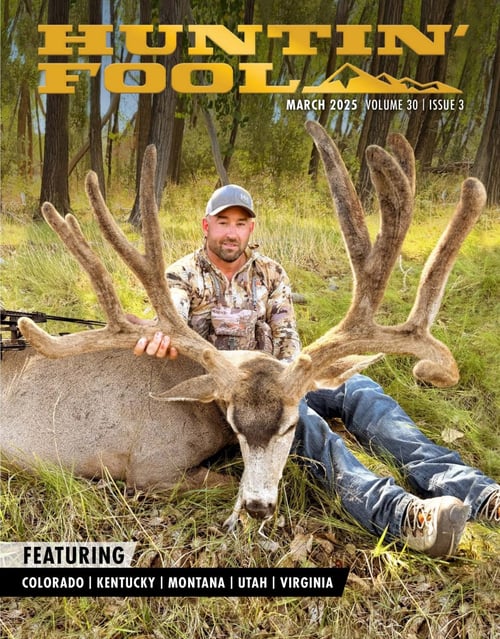
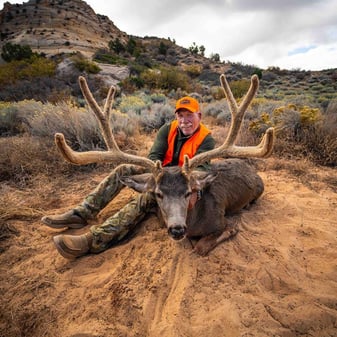
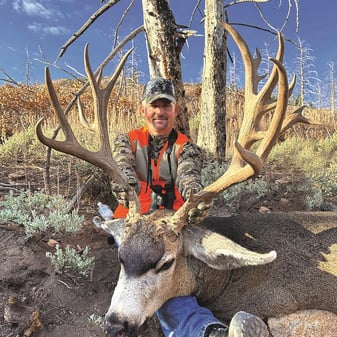
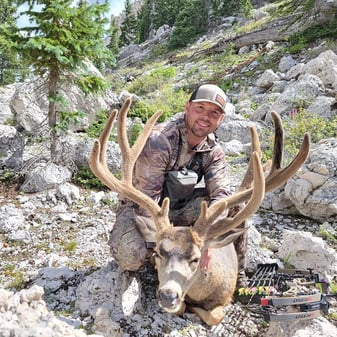
The Drop Tines Buck
Black Bear: February 18, 2025
Big Game: April 24, 2025
Antlerless & Points Only: June 18, 2025
Swan & Grouse: Mid July, 2025
Youth & Archery General Elk Permits on Sale: July 8, 2025
Any-Bull General Elk Permits on Sale: July 10, 2025
Spike General Elk Permits Available: July 17, 2025
Private-lands Cow Elk Permits Available: July 29, 2025
Sportsman's Resident Raffle: November 6, 2025
Spring Turkey: December 27, 2025
| UP-FRONT FEES | |
| Non-Resident Hunting License | $147.17 |
| Youth (<18) Non-Resident Hunting License | $44.97 |
| Application Fee Per Species | $21.46 |
| POST DRAW FEES (IF SUCCESSFUL)* | |
| Desert Bighorn Sheep | $4,075.74 |
| Rocky Mountain Bighorn Sheep | $4,075.74 |
| Moose | $3,564.74 |
| Rocky Mountain Goat | $3,564.74 |
| Bison | $4,946.48 |
| Limited-Entry Elk | $1,992.90 |
| Multiseason Limited-Entry Elk | $2,713.41 |
| General Bull/Spike Elk (Adult or Youth) | $867.68 |
| Multiseason General Spike Elk (Adult) | $1282.61 |
| Youth Only General Elk | $765.48 |
| Premium Limited-Entry Buck Deer | $1,428.76 |
| Multiseason Premium Limited-Entry Buck Deer | $2,381.26 |
| Limited-Entry and Limited-Entry Management Buck Deer | $1,093.54 |
| Multiseason Limited-Entry Buck Deer | $2,309.72 |
| General Deer | $612.18 |
| General Deer Dedicated Hunter Program (Adult) | $1,275.46 |
| General Deer Dedicated Hunter Program (Youth) | $935.13 |
| General Deer Dedicated Hunter Program - Per Hour | $40.88 |
| Antelope | $583.56 |
| Rocky Mountain Bighorn Sheep (Ewe) | $2,146.20 |
| Cow Moose | $2,248.40 |
| Cow Elk | $663.28 |
| Doe Deer | $241.19 |
| Doe Antelope | $241.19 |
| Black Bear | $613.20 |
| Multiseason Black Bear | $908.56 |
| Turkey | $178.85 |
| All pricing includes the 2.2% processing fee. *Current as of September 2025 |
|
| UP-FRONT FEES | |
| Hunting License | $40.88 |
| Youth Hunting License (< 18 Years Old) | $16.35 |
| Application Fee Per Species | $10.22 |
| POST DRAW FEES (IF SUCCESSFUL)* | |
| Desert Bighorn Sheep | $576.41 |
| Rocky Mountain Bighorn Sheep | $576.41 |
| Moose | $463.99 |
| Mountain Goat | $463.99 |
| Bison | $470.12 |
| Limited-Entry Elk | $320.91 |
| Multiseason Limited-Entry Elk | $574.41 |
| General Bull/Spike Elk (Adult or Youth) | $57.23 |
| Multiseason General Spike Elk (Adult) | $204.40 |
| Youth Only General Elk | $51.10 |
| Premium Limited-Entry Buck Deer | $189.07 |
| Multiseason Premium Limited-Entry Buck Deer | $343.39 |
| Limited-Entry and Limited-Entry Management Buck Deer | $96.07 |
| Multiseason Limited-Entry Buck Deer | $173.74 |
| General Deer | $47.01 |
| General Deer Dedicated Hunter Program (Adult) | $219.73 |
| General Deer Dedicated Hunter Program (Youth) | $122.64 |
| General Deer Dedicated Hunter Program - Per Hour | $40.88 |
| Antelope | $64.39 |
| Rocky Mountain Bighorn Sheep (Ewe) | $112.42 |
| Cow Moose | $254.48 |
| Cow Elk | $58.20 |
| Doe Deer | $37.20 |
| Doe Antelope | $35.77 |
| Black Bear | $95.05 |
| Multiseason Black Bear | $187.03 |
| Turkey | $40.88 |
| All pricing includes the 2.2% processing fee *Current as of September 2025 |
|
| MULE DEER (LIMITED ENTRY) | |
| Archery | Aug 16 – Sep 12, 2025 |
| Muzzleloader | Sep 24 – Oct 2, 2025 (varies by unit) |
| Muzzleloader (Late hunt on General Units) | Oct 29 - Nov 6, 2025 |
| Rifle | Oct 18 – Oct 26, 2025 (varies by unit) |
| HAMMS | Nov 8 - Nov 30, 2025 |
| MULE DEER (GENERAL) | |
| Archery | Sep 2 – Sep 30, 2025 |
| Muzzleloader | Sep 24 - Oct 2, 2025 |
| Rifle (1st season) | Oct 8 - Oct 12, 2025 |
| Rifle (2nd season) | Oct 18 - Oct 26, 2025 |
| PRONGHORN | |
| Archery | Aug 16 – Sep 12, 2025 |
| Muzzleloader | Sep 24 – Oct 2, 2025 |
| Rifle | Sep 13 – Sep 21, 2025 |
| ELK (GENERAL) | |
| Archery (Spike Units) | Aug 16 – Sep 5, 2025 |
| Archery (Any Bull Units) | Aug 16 – Sep 17, 2025 |
| Rifle (Spike Units) | Oct 4 – Oct 16, 2025 |
| Rifle (Any Bull Units) | Oct 4 – Oct 10, 2025 (1st season) |
| Rifle (Any Bull Units) | Oct 11 – Oct 17, 2025 (2nd season) |
| Muzzleloader (Any Bull Units) | Oct 29 – Nov 6, 2025 |
| ELK (LIMITED) | |
| Archery (Early) | Aug 16 – Sep 16, 2025 |
| Archery (Late) | Nov 29 – Dec 14, 2025 |
| Muzzleloader | Sep 22 – Oct 3, 2025 |
| Elk Rifle (Early) | Sep 17 – Sep 21, 2025 |
| Rifle (Mid) | Oct 4 – Oct 16, 2025 |
| Rifle (Late) | Nov 8 – Nov 16, 2025 |
| BISON | |
| Any Legal Weapon | Nov, 2025 – Jan, 2026 (varies by unit) |
| DESERT BIGHORN SHEEP | |
| Any Legal Weapon | Sep 13 – Nov 10, 2025 |
| ROCKY MOUNTAIN BIGHORN SHEEP | |
| Any Legal Weapon | Oct – Nov, 2025 (varies by unit) |
| MOUNTAIN GOAT | |
| Any Legal Weapon | Sep – Nov, 2025 (varies by unit) |
| SHIRAS MOOSE | |
| Any Legal Weapon | Sep 13 – Oct 31, 2025 |
| YEAR | ELK, DEER, ANTELOPE & ONCE-IN-A-LIFETIMES | BLACK BEAR | ANTLERLESS |
|---|---|---|---|
| 2025 | May 13 (emails & online) | February 27 | July 2 |
| 2024 | May 14 (emails & online) | February 28 | July 5 |
| 2023 | May 25 (emails) | February 28 | July 6 |
| 2022 | May 13 (emails) | March 2 | June 28 |
| 2021 | May 11 (emails) | March 2 | June 29 |
| 2020 | May 15 (emails) | June 30 | |
| 2019 | May 13 (emails) | ||
| 2018 | May 11 |
Utah offers two categories for deer permits — limited-entry and general season. Both are awarded through a draw system, but they have different point systems and separate draws. You can only hold one mule deer buck permit per year. If you’re selected for a limited-entry buck deer permit, you’re not eligible for a general season buck permit.
| UNIT | COMMENTS |
|---|---|
| Book Cliffs | East‐central strip along CO border. Archery/muzzleloader cover full unit; rifle split N/S. Flat mesas with drainages, pine ridges, sage/oak flats, pinyon/juniper hills. Good public roads; south more rugged. Little Creek roadless area in north holds older deer but tough. Archery fun; muzzleloader harder in cover. North rifle holds bulk; South tougher as deer migrate. Quality stable; few tags. Non-resident multi-season permit offered. |
| Cache, Crawford Mtns | NE corner along WY border. Late muzzleloader hunt targeting migratory bucks from WY, but migration limited by low population. Excellent road access; large central range. Glassable sage steppe and winter range; ag fields west edge. Quality low—few bucks over 160″. Cold/snow push deer in but size below other limited-entry units. |
| Diamond Mtn | NE corner south of WY along CO border. South: pinyon/juniper sage; central: patchwork private ag/grassland; north: timbered pine/sage with walk-in lands. Best bucks on private—170–180″ potential; public mostly 160–170″. Outfitter recommended. |
| Fillmore, Oak Creek | West of I-15; small public-land unit; burned heavily in 2012/2020. Growing oak makes glassing tough. Few roads/trails; water crucial for early hunts. Quality down but better than pre-burn; muzzleloader/rifle better than archery. Holds 170–180″ potential. |
| Henry Mtns | South-central unit; steep rugged above timberline to desert mesas. Great glassing on alpine basins and burns. Archery/muzzleloader offer biggest buck chances; quality improving—180–190"+ potential. Crowded by outfitters and spotters. |
| Henry Mtns, Little Rockies | Low-elevation desert and rocky bluffs. Resembles desert sheep country. Bulk herd on Mt Hillers; few resident bucks. Remote, slim sightings but giant potential for patient hunters. |
| Kaiparowits HAMSS | Giant desert HAMSS unit; low deer densities but top genetics. Sand canyons with pinyon/juniper; few roads—backpack/horse needed. Water scarce—elk concentrate there. Outfitter or deep scouting needed for giant bucks. |
| La Sal, Dolores Triangle | East-central along CO border; rifle only for non-residents. Mesa country with pinyon/juniper/sage; deer migrate from CO unit 40. Snow helps movement. Focus river corridors for older bucks. Late hunt; any-weapon open to non-residents—170–180″ potential. |
| Paunsaugunt | Southern UT plateau from Hwy 12 to AZ border. North: pine/aspen/manzanita; south: oak/pinyon/juniper/sage. Excellent access. Migratory herd now resident below rim. Archery great on summer patterns; late hunts require extra effort. Good quality—190–200″ in wet years. Multiple management hunts including cactus buck. |
| San Juan, Elk Ridge | SE unit along CO border; Elk Ridge north–south spine. Oak/pinyon/juniper low to mixed conifer high. Good public roads with remote canyons. Archery best for older bucks; muzzleloader next; rifle tougher as bucks hide. Quality tied to moisture; expect down year in 2025. |
| San Juan, Mancos Mesa (HAMSS) | Part of Elk Ridge deer; new 2025 HAMSS tag. Low resident herd with migration from San Juan Mtns. Desolate desert habitat; few roads. Giant buck potential in good years; outfitter highly recommended. |
| West Desert, Vernon | West‐central desert with public land and good access; elk in Sheeprock Mtns and scattered canyons. Excellent glassing in oak/sage/pinyon/juniper. Bow/muzzleloader hunts good; rifle offers wide views but fewer old bucks. Only three non-resident multi-season unit; some 180"+ bucks but average 160–170″. |
| UNIT | COMMENTS |
|---|---|
| Boulder/Kaiparowits (Restricted Weapon Unit) | Southern UT from Hwy 24 near Loa to the AZ border at Lake Powell. Deer concentrate on Parker Plateau (sage/aspen) and Boulder Plateau (mixed conifer), with mahogany, pinyon, juniper canyons around. Population lower south of Hwy 12 despite abundant public land; improved by aggressive lion control yielding more mature bucks. Begins restrictive‐weapon regulations in 2025 for at least five years; managed for 15–17 bucks/100 does. |
| Manti/San Rafael | Northern UT giant unit from alpine basins to pinyon/juniper desert canyons. Most deer in Manti‐La Sal NF west of Hwy 10; sparse desert south of I-15. Population improving after a winter mortality setback; older age‐class bucks emerging. High tag numbers/pressure, but remote pockets exist. Managed for 15–17 bucks/100 does. |
| Mt. Dutton | South-central UT; below objective population but mature buck numbers up after multi‐year permit cuts. Low tag numbers mean light pressure. Habitat: aspen/pine high elevations; rolling sage/aspen north; eastern ridges burned in 2002; southern mix of burn scars, pinyon, juniper, sage. Limited roads; deer in sage/bitterbrush pockets. Requires hiking remote canyons. Managed for 15–17 bucks/100 does. |
| Nebo | Central UT unit now above objective but still below historic levels. Managed for lower age class, yet fair numbers of 3+-year bucks remain. Steep, rough terrain with limited access roads (more south of Hwy 132 but private land issues; north more roadless). 2018 Pole Creek fire created habitat but is remote. Requires fit, patient hunters. Managed for 15–17 bucks/100 does. |
| Panguitch Lake | South-central UT with early October any-weapon season. Habitat from pine/aspen forests to pinyon/juniper/mahogany ridges and sage hills. Stable population; younger age class depleted by 2015–19 tags but improved by 2019–22 cuts and forage regeneration. Spike archery and rifle hunters add pressure. Managed for 15–17 bucks/100 does; quality may dip if tags rise again. |
| Pine Valley | SW UT; early October any-weapon season. Herd in mid-elevation pinyon/juniper/oak; migrate in late October. Early season ideal on summer range; late better in lower transition. Good for all weapons; heavy pressure near roads, so remote rugged areas key. Declining population, but thick cover hides exceptional bucks. Managed for 18–20 bucks/100 does. |
| San Juan, Abajo Mtns | SE UT big unit from conifer/aspen peaks down to pinyon/juniper canyons and ag fields. Deer on rise and buck:doe improving but ratio lowered in 2025. Early archery/muzzleloader best in open terrain; rifle tougher as bucks slip to thick cover and private land. Managed for 15–17 bucks/100 does. |
Those applying for a buck deer, elk, antelope, moose, Desert bighorn sheep, Rocky Mountain bighorn sheep, Rocky Mountain goat, or bison tag will need to apply between January 27th and March 3rd. Those applying for bonus and/or preference points can apply between March 4th and 17th.
Our magazine, which is available in print and online, has everything in one location - application info, draw details and odds, fees, hunter requirements, point structure, age restrictions, youth information, weapon restrictions, other tag opportunites, hunt planning, and much more. If you would like access to all of our research, join today!
| UTAH MULE DEER HUNT TYPE | 2025 SEASON DATES |
|---|---|
| Limited Archery | Aug 16 – Sep 12, 2025 |
| Limited Muzzleloader | Sep 24 – Oct 2, 2025 (varies by unit) |
| Limited Muzzleloader (Late hunt on General Units) | Oct 29 - Nov 6, 2025 |
| Limited Rifle | Oct 18 – Oct 26, 2025 (varies by unit) |
| Limited HAMMS | Nov 8 - Nov 30, 2025 |
| General Archery | Sep 2 – Sep 30, 2025 |
| General Muzzleloader | Sep 24 - Oct 2, 2025 |
| General Rifle (1st season) | Oct 8 - Oct 12, 2025 |
| General Rifle (2nd season) | Oct 18 - Oct 26, 2025 |
Disclaimer: Utah mule deer seasons vary by unit and permit. Always confirm dates in the official Utah DWR proclamation before planning.
$199 BILLED ANNUALLY
Unlimited One-On-One hunt consultations and everything you need to prep like a pro and hunt like a fool.
$48 BILLED ANNUALLY
Access our digital research tools, draw more tags, and hunt with better information.
Our members experience improved hunting opportunities as a direct result of the Huntin' Fool magazine. We are the only publication that breaks more than 20 states' hunting regulations and draw systems into bite-sized chunks for our members.
Limited-entry hunts are designed to maintain higher buck-to-doe ratios and are divided into premium limited-entry and standard limited-entry categories. The Paunsaugunt and Henry Mountains are classified as premium limited-entry units and are managed to maintain a buck-to-doe ratio of 40-55 bucks per 100 does. These units are known for their top-tier trophy potential, though other standard limited-entry areas like Oak Creek, San Juan, and Dolores Triangle can produce a few high-quality bucks every year.
Standard limited-entry units are managed for a 23-35 buck-to-doe ratio per 100 does. While these units can still produce trophy bucks, finding one of that caliber may take more effort and patience.
You will get a good idea of the quality associated with each unit as you read through unit descriptions for each of the limited-entry units. Even the lower-tier managed units like Book Cliffs and West Desert/Vernon will be good, fun hunts with plenty of bucks to choose from, but it will be much harder to find a buck over 170". Most of these limited-entry units in Utah have excellent public access and are mostly public land except Diamond Mountain. This unit still has enough public land to hunt and be successful, but it is bordering 50/50 public/private. An outfitter can give you access to portions of private land, which would be very beneficial here.
Utah has added a few brand new hunts this year to the lineup. There are four new rifle hunts that are honestly completely different from each other, except for the two La Sal late rifle hunts. The La Sal hunts were put in place to address CWD (Chronic Wasting Disease) concerns in the local populations surrounding the town of Moab. Small, isolated units were implemented (Moab Valley and Castle Valley) during the rut to provide the best chance at harvesting the oldest age-class buck possible as UDWR believes these older bucks are the main spreaders of the disease. There could be a couple of nice bucks taken from these hunts, but overall, they are expected to be decent hunts for a mature buck.
The Thousand Lakes unit was moved back into the limited-entry hunts this year after being a general season unit for quite a few years. This unit was originally moved over to a general season unit because it wasn’t performing as a limited-entry hunt. Now, ironically, it is being moved back to a limited-entry hunt because it wasn’t performing as a general season hunt. They are now managing this solely as a restricted weapon unit, and it will most likely continue to struggle to produce good results with such a small, limited population.
The two hunts that have the best potential for trophy quality that were added this year are the Little Rockies and Manco Mesa hunts. Both hunts are in very remote desert areas with small populations that receive a small increase of deer with winter migration. The Little Rockies is located within the Henry Mtns unit and is as remote an area as there is on that unit. It rarely gets hunted as there are very few deer out there, but this late rut hunt will give the lucky few hunters a chance to possibly harvest a giant buck. The Mancos Mesa unit is within the San Juan Elk Ridge unit and is similar to the Little Rockies in the remoteness and low deer densities. This area also has big buck potential, and both areas will require the aid of an outfitter or an extreme amount of scouting to be successful.
Pay attention to the moisture levels in the southern part of the state’s limited-entry areas. Southern Utah has received very little winter moisture this year, and bucks have a tendency to shrink up a bit when dry conditions such as the current weather pattern are present. Take this into consideration when applying and setting expectations as this year has the potential to produce below average antler growth.
Utah offers additional limited-entry hunts to help manage hunter applications and reduce pressure on the limited-entry deer point system. One of these is a series of management hunts on the Paunsaugunt which include archery, muzzleloader, and rifle seasons. New for 2025, the Henry Mtns will again have a rifle season for this type of hunt. Permit holders can harvest an antlered deer with no more than 3 points (excluding eyeguards) on one side. These hunts offer a great opportunity for an enjoyable experience, with plenty of game and the chance to harvest mature bucks.
Another unique hunt is the cactus buck hunt, which allows hunters to harvest an antlered deer with at least 50% of its antlers covered in velvet. This hunt was created to address a rise in cactus bucks within the Paunsaugunt unit. Initially, the hunt provided good opportunities when there was a high number of cactus bucks, but now, as their numbers have dwindled, finding a cactus buck with a decent rack has become a rare and challenging task, almost like searching for a needle in a haystack.
Advisor Articles from Our Magazine on Utah Application and Hunting Strategy
Another type of limited-entry hunt in Utah takes place on general season units and is known as the HAMSS hunt, which stands for Handgun, Archery, Muzzleloader, Shotgun, and Straight-Walled Cartridge. These hunts occur after the general season, typically in November. The muzzleloader portion of the hunt coincides with the mule deer rut, offering hunters a chance to target older, more vulnerable bucks. However, since these hunts are on general season units, mature bucks are less common, making it challenging to find a true trophy.
We don’t provide specific comments on all of these hunts as they tend to be a gamble in terms of hunt quality and harvest success. While the HAMSS hunts allow the use of a muzzleloader within certain guidelines, there are different restrictions that hunters should review on page 106. Of the three HAMSS hunts available, the Book Cliffs/Floy Canyon and Kaiparowits units offer the best potential for trophy bucks. These areas have lower deer populations and will present a tough challenge, but they’re home to a few bucks that may exceed the 180” mark.
Utah offers late limited-entry muzzleloader hunts on all general season units. This program began in 2015 with a small number of units and has since expanded and adjusted over the years. It has been successful in providing more limited-entry hunt opportunities for applicants to use their points, helping to clear out a few more hunters from the limited-entry pool.
These later season hunts can be effective in finding mature bucks as they move closer to does, but rut activity can be unpredictable, making it a bit of a hit-or-miss situation. While some great bucks have been taken, those are the exception rather than the rule.
It’s important to note that these general season units are managed for lower buck-to-doe ratios compared to Utah’s dedicated limited-entry units. As a result, finding bucks over 180” can be challenging. If you’re hoping for a better shot at an older age class buck, it’s worth considering Utah’s top general season units. Pay attention to the three-year average buck-to-doe ratios listed in the table as they can give you an idea of which units might have a better chance of producing older bucks.
Utah is a great state to apply for limited-entry deer hunts, especially if you’re already applying for other species and don’t mind waiting 14+ years for entry-level unit bonus permits or a shot at a random permit. With some of the best deer genetics in the West, it’s definitely worth tossing your name in the hat for an additional $16.
For most general season units in Utah, permit distribution is divided into 20% archery, 20% muzzleloader, and 60% rifle. Of the 12 units with two rifle seasons, 20% of the rifle permits are allocated to the early October season, with the remaining going to the late season hunts.
For 2025, there have been some changes to general deer hunt units both in legal hunt methods as well as boundary changes. Utah instituted new restricted muzzleloader and rifle hunt units as a legal method of take. The Beaver, West; Boulder/Kaiparowits; and Cache units are all part of this new hunt method of take. Archery on these units will remain the same as the state guidelines for legal archery use. You can refer to the first section of the state section under “Weapon Restrictions” to see the legal definitions of muzzleloader and rifle restrictions. Ultimately, the creation of these restricted-weapon areas was intended to allow for more opportunity with limiting harvest through limiting technology.
If you’ve accumulated more points than needed to draw a hunt, consider teaming up with a friend for a group application. You’ll enter the draw using the average points of everyone in the group. Remember, you can apply for both a limited-entry and a general season deer hunt each year. Think of them as separate draws for different species. If you draw a limited-entry deer permit, your general deer application will be voided, but you’ll still receive a preference point.
We’ve compiled a table with our top picks for general season deer units, including draw odds and harvest statistics for each unit and season. These top picks are based on factors like buck-to-doe ratios, harvest success, public land access, and our on-the-ground knowledge. We believe these units offer the best chance for a successful hunt, especially for mature bucks.
If you drew an archery deer or elk permit in any unit or are enrolled in the Dedicated Hunter program, you may also hunt the extended archery season in the extended archery areas. There will be a total of 10 deer areas and 3 elk areas. Most of these extended areas have private land issues, with some being entirely private land. Some elk areas are all located along the Wasatch Front and North and Northeast Utah and run August 16-December 15. The deer areas are starting to be scattered all throughout the state, with the bulk of them located in North and Northeast Utah and run September 13-October 15 or November 30th. The extended season is better later when bucks are rutting and migrate into middle and lower elevations. There can be high hunting pressure and success rates are low, but it can extend your season if you were previously unsuccessful in filling your permit. For a full list of units, boundary descriptions, and season dates, go to www.wildlife.utah.gov/extendedarchery or view units on the UDNR Hunt Planner at https://dwrapps.utah.gov/huntboundary/hbstart.
Utah also offers a Dedicated Hunter program for general season deer units. To participate, you must apply and be selected for the program. If drawn, you can hunt all seasons (archery, muzzleloader, and any available rifle) and can harvest up to two bucks over a three-year period. The permit is guaranteed for all three years, but you’re limited to harvesting two bucks during that time.
New for 2025, you may not apply for or build points for both the Dedicated Hunter draw and the general season deer draw. You must now only participate in one draw at the time of application. If selected, you’ll be enrolled in the program for three years in the unit you were drawn for. As a Dedicated Hunter, you’ll need to complete an online conservation and ethics course, contribute 32 service hours on Division-approved conservation projects, and pay a permit fee of $1,067. Alternatively, you can buy out your service hours at $40 per hour.
If you have the time and commitment to hunt, this is a fantastic opportunity to harvest a quality buck as it allows you to hunt all seasons and the same unit for multiple years.
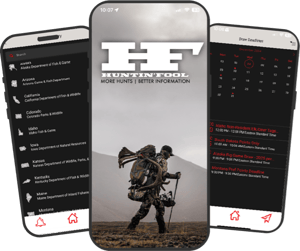
Huntin’ Fool offers a wide variety of services and resources within the hunting space, and the Huntin’ Fool App offers access to them all. Utilizing this app, you will be able to apply for hunts, plan hunts, buy hunts, and win hunts. This app is simple to use and puts the tools you need to go on great hunts right at your fingertips.
At Huntin' Fool, we are always looking for ways to improve our service and help out members to the very best of our abilities. We believe communication is what makes our Huntin' Fool community great!
In Utah, the cost of a deer tag for non-residents includes several fees. The nonrefundable application fee is $16.35, and a nonresident hunting license, which is required to apply or buy a tag, costs $122.64. The tag costs are $815.56 for a Premium Limited Entry Deer tag, $684.74 for a Limited Entry Deer tag, and $427.20 for a General Deer tag.
Yes, non-residents can hunt mule deer in Utah. They must apply for the necessary tags and licenses, including non refundable application fees, a nonresident hunting license, and the appropriate tag fees depending on the type of mule deer hunt they are pursuing. Non-residents can participate in both Limited Entry and General Deer hunts (but not in the same year), subject to the same application processes and draw systems as residents.
The Utah deer draw for Limited Entry hunts uses a hybrid point system, while General Deer hunts use a preference point system.
When applying for deer hunts in Utah, there are several special considerations. Party applications are limited to four hunters, and points are averaged among all group members. Applicants must be at least 12 years old by the end of the year to be eligible. Additionally, all applicants must purchase a nonrefundable hunting license to apply or buy a hunt tag.
Both General and Limited Entry archery and early rifle hunts overlap with general season elk hunts, resulting in additional hunting pressure. General deer hunts issue substantially higher tag numbers compared to Limited Entry deer hunts, leading to more competition and pressure in those areas.
Both Limited Entry and General deer tags can be applied for, but only one can be drawn, with Limited Entry tags drawn first. If you purchase a hunting license to apply for deer, you can also apply for additional species for an application fee of $16.35 each. Other Limited Entry species can take 20-30+ years to accumulate enough points to guarantee a draw. Adults can mentor their tags to youth, and youth receive preference for 20% of all General deer tags.
The cost of using a guide or outfitter for deer hunting in Utah varies. For hunts with drawn tags, prices range from $5,500 to $7,000. General hunts cost between $4,000 and $7,000. Cooperative Wildlife Management Unit (CWMU) hunts are more expensive, ranging from $20,000 to $40,000. Prices can differ slightly between outfitters.
In Utah, trophy and size expectations for deer vary between Limited Entry and General hunts. For Limited Entry hunts, deer typically score 160 inches or more, with some units producing deer with scores of 180 inches and higher. For General Deer hunts, expectations are generally between 140 to 160 inches.
In Utah, the best draw odds for deer hunting vary by unit management and access. For Limited Entry hunts, units like Diamond Mountain have better draw odds compared to units like the Book Cliffs due to access issues. For General Deer hunts, northern units typically have better draw odds because they have more private land.
In Utah, areas with the highest success rates for deer hunting vary between Limited Entry and General hunts. For Limited Entry units, success rates generally align with buck-to-doe ratios and weapon type. Most Limited Entry units have high success rates, with archery hunts achieving 60%+ success and rifle hunts achieving 80-90%. For General Deer hunts, success rates also follow buck-to-doe ratios, with archery hunts typically achieving 15-25%, muzzleloader hunts 25-50%, and rifle hunts 40-60%.
The time it takes to obtain a deer tag in Utah varies between General and Limited Entry hunts. For Limited Entry hunts, drawing an archery tag in the easiest unit currently takes 16 years (potentially 25+ years if starting now), with most requiring 19+ points right now. Rifle tags in the easiest unit take 20 years (potentially 30+ years if starting now), with most requiring 23+ points right now. Muzzleloader tags in Limited Entry units require over 20 years, while late muzzleloader hunts on general units take over 14 years. For General hunts, archery tags typically take 0-2 years, rifle tags 3-6 years, and muzzleloader tags 2-4 years.
In Utah, areas with the best trophy quality for deer hunting vary by hunt type. For Limited Entry hunts, all units have good mature bucks, but Premium Limited Entry units are managed for a higher buck-to-doe ratio and typically produce more mature bucks. For General Deer hunts, Utah manages units with two different buck-to-doe ratios. Units with an 18-20 buck-to-doe ratio usually produce better bucks, although factors like tag cuts, burns, and predator management often have a bigger impact on the quality of bucks harvested in general season units.
Typically southern Utah has more accessible public land to hunt than northern Utah. There are few exceptions but that is the general rule.