The Inside Track: Short Time, Revisited
| UP-FRONT FEES | |
| Moose Application Regular Lottery | $25.00 |
| Moose Application Archery Lottery | $25.00 |
| POST DRAW FEES (IF SUCCESSFUL) | |
| Adult Hunting License | $102.00 |
| Youth Hunting License | $25.00 |
| Moose Permit | $350.00 |
| UP-FRONT FEES | |
| Moose Application Regular Lottery | $10.00 |
| Moose Application Archery Lottery | $10.00 |
| POST DRAW FEES (IF SUCCESSFUL) | |
| Adult Hunting License | $28.00 |
| Youth Hunting License | $8.00 |
| Moose Permit | $100.00 |
| SEASON | VERMONT SEASON DATES |
|---|---|
| MOOSE: ARCHERY ONLY (IF PERMITS ISSUED) | October 1 – October 7, 2025 |
| MOOSE: REGULAR SEASON (IF PERMITS ISSUED) | October 18 – October 23, 2025 |
| YEAR | RESULTS POSTED |
|---|---|
| 2025 | July 15 |
| 2024 | July 17 |
| 2023 | July 19 |
| 2022 | Early August |
| 2021 | Early August |
| 2020 | Early August |
| 2019 | Draw Cancelled |
The 2025 Vermont moose hunt application period is open for applicants to apply. Go to https://vtfishandwildlife.com/node/344 for more information on Vermont moose hunting. Vermont has two different moose lotteries. The first lottery is for the archery hunt with dates of October 1-7, and the second lottery is for the regular season with dates of October 18-23. Any legal weapon may be used on the regular lottery hunt. For 2025, Vermont will again be offering 74 either-sex moose permits through the draw. The moose drawing will be held on July 15th.
Online applications must be completed by midnight on June 18, 2025. You only submit the application fees; you do not have to purchase your license or moose tag until you have drawn the permit. Paper applications are available upon request by calling 802-828-1190 or emailing cheri.waters@vermont.gov.
Vermont continues to battle with heavy winter tick loads in its core moose range. Calf survival rates have been hit especially hard with an estimation of half surviving their first winter. The Department believes that to improve the health of moose in Northeastern Vermont, moose population reduction is necessary to break the winter tick cycle. Research shows that a moose population with less than one moose per square mile supports relatively few winter ticks that do not impact moose populations.
For 2025, 80 either-sex permits are proposed – 54 rifle permits, 20 archery permits, 3 auction permits, and 3 special opportunity permits. Another 100 antlerless-only permits are proposed. All of these hunts will only take place in E1 and E2, which are Vermont’s most densely-populated units.
Vermont’s archery moose hunt will take place October 1-7, 2025. Eleven permits will be issued for E1, and nine will be issued for E2. Two archery permits may be awarded to non-resident applicants in 2025. Hunters who draw an archery tag will have a great chance at finding a big bull with their season dates hitting the peak of the rut.
The regular season rifle hunt will take place October 18-23, 2025 and will have 54 either-sex lottery permits available, 5 of which are set aside as veteran permits. Twenty-nine of the permits will be for E1, and 25 will be for E2. In addition to the either-sex permits, there will be 55 antlerless-only permits drawn for E1A and another 45 drawn for E2A. Up to 15 regular season permits may be awarded to non-resident applicants. During the regular season hunt, the rut will be winding down and you can expect to cover a lot of country to find a bull.
Last year, a total of 174 moose tags were awarded by lottery in E1 and E2. The Department issued 20 either-sex permits by lottery for the archery season, and all three auction permit winners elected to hunt the E1 archery season. The archery season is hands down the best time to harvest a big bull as it takes place in the middle of the rut. In 2024, the 13 archery hunters in E1 had a 46% success rate and the 10 E2 hunters were 60% on bulls. Of the six archery bulls taken in E1, half broke the 50” mark. Of the six archery bulls taken in E2, half of those also broke the 50” mark.
The regular season hunters were met with extremely challenging conditions with temperatures at or near record highs the first five days of the season. As a result, success rates were the lowest ever for moose in E1 and E2. As is typically the case, most of the harvest occurred in the first half of the season, and the two lowest harvest occurred on the last day. Between E1 and E2, only 28% of either-sex tags were filled on bulls. E2 either-sex hunters saw a little better bull harvest rate than those of E1 with 32% success in E2 and 25% in E1.
Located in the northeast corner of Vermont, WMUs E1 and E2 have traditionally been the best areas in the state for producing trophy bulls. An argument can be made for either unit being the better of the two, but the difference between the units is marginal. E1 has had more logging cuts along with a slightly better population density, making it a little easier to turn up a bull. On the other hand, E2 is not hunted as much, providing the possibility of turning up a big, mature bull as well. Over the past three seasons, the average bull harvested in E1 has been 42 3/8” wide, while E2’s average width has come in at 40 2/8” wide. Sixteen of the 55 bulls harvested in E1 cleared the 50” mark, while 10 of the 39 bulls taken in E2 broke the same mark.
Most moose hunters hire a moose retrieval service to assist in getting their moose out of the woods. A contact list with Vermont-approved retrieval services will be mailed to you in your moose permit package if you are successful in drawing a permit. Vermont also has some great moose outfitters that are very reasonably priced if you are looking for a guided hunt. If you draw a tag and are looking for an outfitter, give us a call as we have Endorsed Outfitters in Vermont. While Maine and New Hampshire are better trophy-producing states, Vermont produces a few really good bulls every year. Opportunities to hunt Canadian moose are rare, and with the inexpensive application fees, make sure you get your name in the hat for the Vermont moose draw!
Up to 10% of the moose hunting permits may be issued to non-resident hunters. Permittees are selected through a computer-generated random drawing. Each applicant selected in the drawing is assigned their first choice, except when the permit quota for that unit has already been filled, in which case they will be issued their next available choice.
Vermont has a five-year waiting period after accepting a moose permit. Bonus points cannot be accrued during the five-year waiting period after accepting a moose permit.
Successful applicants will be sent a winner’s packet within a few days of the drawing. The winner’s packet will include a Moose Hunter’s Guide, Moose Permit Form, and instructions for purchasing the permit. Successful applicants have 15 days to return the completed forms and fees to Vermont’s office. If the packet is not received by the deadline, you will forfeit your winning permit and it will be reissued.
$199 BILLED ANNUALLY
Unlimited One-On-One hunt consultations and everything you need to prep like a pro and hunt like a fool.
$48 BILLED ANNUALLY
Access our digital research tools, draw more tags, and hunt with better information.
Our members experience improved hunting opportunities as a direct result of the Huntin' Fool magazine. We are the only publication that breaks more than 20 states' hunting regulations and draw systems into bite-sized chunks for our members.


For online applications, you may use Visa, MasterCard, or Discover. For paper applications, you must send a check or money order payable to the Vermont Fish and Wildlife Department. All application fees are non-refundable.
| Moose Hunts | Season Dates |
|---|---|
| Archery Only (if permits issued) | October 1 – October 7, 2025 |
| Regular Season (if permits issued) | October 18 – October 23, 2025 |
| Deer Hunts | Season Dates |
|---|---|
| Archery | October 1 – November 14 and December 1 – 15, 2025 (Closed during regular November season) |
| Youth & Novice Weekend | October 25 – October 26, 2025 |
| Muzzleloader Antlerless (in select WMUs if permits issued) | October 30 – November 2, 2025 |
| Regular Season | November 15 – November 30, 2025 |
| Muzzleloader | December 6 – December 14, 2025 |
| Black Bear Hunts | Season Dates |
|---|---|
| Early Season | September 1 – November 14, 2025 |
| Resident Hunters with Dogs (by permit) | September 1 – November 23, 2025 |
| Nonresident Hunters with Dogs (by permit) | September 15 – November 23, 2025 |
| Late Season | November 15 – November 23, 2025 |
Advisor Articles from Our Magazine on Gear Reviews and Hunting Strategy
There is no minimum age to apply and hunt moose in Vermont as long as the hunter has passed a hunter safety class. There is no minimum age to apply for bonus points.
Starting in 2006, Vermont instituted a bonus point system for its regular lottery, and in 2011, they instituted a bonus point system for the archery lottery. Unsuccessful applicants accrue one point for each consecutive year they apply for each lottery. Each point translates to a chance in the drawing – the first year you apply, you have one chance in the lottery; in the second year, you have two chances; etc. Applicants lose all accrued points if they do not apply for the lottery for one year or if they accept a moose permit. You may apply for points only for $25 each for the regular lottery or the archery lottery. You may apply online or with a paper application.
In 2024, 1,532 non-residents applied for the 13 non-resident permits drawn in the regular lottery and 678 non-residents applied for the 2 non-resident permits available in the archery lottery.
Vermont does not have any special youth moose tags.
To take a moose, a hunter may use the following: a centerfire rifle or centerfire handgun of not less than .25 caliber, a muzzleloading firearm of not less than .45 caliber with a minimum barrel length of 20” and designed to be fired from the shoulder, a muzzleloading handgun of not less than .45 caliber with a minimum barrel length of 10”, a shotgun not less than 20 gauge loaded with slugs, or a bow that has less than 40 pounds draw weight and broadheads with 7/8” cutting width with no moveable or retracting blades. A crossbow may be used as a means of take by any person during any hunting season that permits the use of a bow and arrow. Proof of completion of bowhunter education will be needed for successful applicants and subpermittees holding an archery moose season permit.
Vermont will auction off three moose hunting permits in the middle of summer to applicants who submit the highest bids through a written bid process. Anyone wanting a bid package may request one by calling 802-828-1190. Bids must be received at the Department’s central office prior to the deadlines established. If you held a moose permit in the last five years, you are not eligible to participate in the moose auction. Vermont does not offer landowner tags.
If you are successful in drawing a moose permit but do not want to go, you may decline the permit. If you choose to decline a permit, you will receive a bonus point for that year, you will not lose any accrued bonus points, and you will be able to apply the next year.
The Vermont Game Commissioner may grant a one-time, one-year deferment to successful moose applicants for reasons of personal or family illness, temporary disability, or military deployment.
Each hunter who is successful in drawing a moose tag may designate one person as a subpermittee to participate in the moose hunt. The subpermittee is a person who can hunt with the permittee, and either the permittee or the subpermittee can kill the moose. Only one moose can be killed per permit, so the permittee and subpermittee must be physically in the presence of each other so that they don’t both kill a moose. A moose permit winner is not allowed to change their subpermittee unless for reasons of personal or family illness, temporary disability, or military deployment. The change must be approved by the Vermont Game Commissioner. No person who has held a Vermont moose permit in the last five years can be a subpermittee on another hunter’s permit. No person who draws a moose permit may be a subpermittee on another hunter’s permit in the same year. No person may be the subpermittee on more than one hunter’s permit in the same year.
You must report your moose within 48 hours of harvest. If reporting a moose October 1st or 2nd, or during the regular season, you must report it to the Vermont Fish & Wildlife Department biological check station. If reporting a moose October 3-7, you must call 802-424-6552 to arrange for a biologist to meet you. If you report a moose after the regular season is closed, you must arrange for a biologist to meet you. A registration form will be completed when you report your moose. You will be required to mark the exact location of the harvest on a USGS map.
The permittee must travel in the same vehicle as the moose during transport to the check station.
Hunting on properly posted land is illegal without written permission. Timber companies own thousands of acres of land across Vermont, especially within the Northeast Kingdom. Most timber companies allow access to their private land. As a hunter, remember that you are a guest and it is a privilege to hunt their private land.
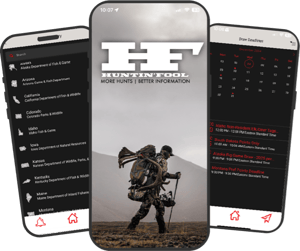
Huntin’ Fool offers a wide variety of services and resources within the hunting space, and the Huntin’ Fool App offers access to them all. Utilizing this app, you will be able to apply for hunts, plan hunts, buy hunts, and win hunts. This app is simple to use and puts the tools you need to go on great hunts right at your fingertips.
Trophy hunting, defined as killing a big game animal solely to take its antlers, hide, or other trophy parts while leaving the carcass behind, is illegal in Colorado. State law considers this a felony offense, and hunters are required to properly tag, utilize, and report their harvests. For certain species like bears, mountain lions, and bobcats, mandatory inspection and sealing of specific parts is also required. While legally licensed hunters can pursue animals for their trophy value, they must comply with all regulations that ensure the full use of the animal and prevent waste.
In Colorado, the general minimum age to hunt big game and mountain lion is 12, though youth can apply for a license at age 11 if they turn 12 before the season ends. Youth ages 12–15 must be accompanied by a qualified mentor while hunting big game, and those under 16 must also be accompanied when hunting mountain lion, turkey (with a youth license), or small game with a youth license. There is no minimum age to hunt turkey as long as hunter education requirements are met. Youth hunters under 18 may purchase reduced-cost licenses, and those meeting education requirements can also choose to buy an adult small-game license, which allows them to hunt without a mentor. All hunters born on or after January 1, 1949, must have a hunter education card.
Be careful using accordions. They are known to shorten pages, yet they come at a higher interaction cost. Accordions are great for FAQs. Here is a UX checklist:
Yes, you can hunt on your own land in Colorado, but you must still follow all applicable hunting laws. This includes having a valid hunting license for the species you're pursuing, completing hunter education if you were born on or after January 1, 1949, and purchasing a Habitat Stamp if you're between ages 18–64. Season dates, bag limits, legal hunting methods, and game management unit regulations still apply on private land. While being the landowner satisfies the permission requirement for private-land-only licenses, you must ensure your land is eligible and within the appropriate hunt unit. Hunting near public roads or highways may also be restricted.
Yes, you can hunt on BLM (Bureau of Land Management) land in Colorado, as it is generally open to public hunting. However, you must have a valid Colorado hunting license and follow all state hunting regulations, including season dates, species rules, and legal methods of take. While BLM land is open to hunting, off-trail game retrieval with motorized vehicles is usually prohibited, and specific rules or access restrictions may apply in certain areas. Hunters are advised to contact the local BLM office for up-to-date maps, regulations, and any closures before heading out.
Yes, you can hunt in National Forests in Colorado. These public lands are generally open to hunting, but you must follow all state hunting regulations, including licensing, season dates, and legal methods of take. Some areas within National Forests may have temporary closures, access restrictions, or special rules, so it’s important to contact the local Forest Service office before your hunt to get up-to-date maps and information. Always confirm the regulations for the specific Game Management Unit (GMU) where you plan to hunt, as many GMUs include portions of National Forest land.
Yes, you can hunt with a suppressor (silencer) in Colorado. Suppressors are legal to own and use for hunting, target shooting, and personal defense. As long as you legally possess a suppressor in compliance with federal regulations, you are allowed to use it while hunting in Colorado, including for big game species like elk and mule deer. Suppressors help reduce noise and recoil, and are increasingly popular among hunters for safety and comfort.
Yes, you can hunt with a crossbow in Colorado, but only under certain conditions. Crossbows are legal for hunting big game and mountain lion **during rifle or associated methods seasons**, not during archery-only seasons. To be legal, a crossbow must have a minimum 125-pound draw weight, a 14-inch draw length, a working safety, and use bolts at least 16 inches long with broadheads that are at least 7/8 inch wide and have two steel cutting edges in the same plane. Crossbows also appear to be allowed for small game, though they cannot be used for archery season big game hunts. The legality of crossbows for turkey hunting is unclear in the available sources, so it’s best to check directly with Colorado Parks and Wildlife for confirmation.
Yes, a non-hunter can accompany a hunter in Colorado under certain conditions. For youth hunters and those using apprentice certificates, a mentor must be present, but the mentor does not have to hunt. Hunters with disabilities may also be accompanied by one or more non-hunters for assistance. In general, non-hunters are allowed to accompany licensed hunters as long as they do not participate in hunting activities and all regulations are followed. However, in areas like State Wildlife Areas (SWAs), non-hunters age 16 or older may need a valid hunting/fishing license or a SWA pass to be present. Always check specific property rules with Colorado Parks and Wildlife before heading out.
Yes, you can carry a pistol while bow hunting in Colorado, but it must be for self-defense only—not for hunting or finishing wounded game. Using a firearm to dispatch an animal shot with a bow is illegal. Open carry is legal, and concealed carry is allowed with a valid Colorado permit (note that not all out-of-state permits are recognized). Handguns are exempt from some transport restrictions, but rifles and bows must be unloaded and cased when transported on off-highway vehicles. Discharging any weapon from or across a public road or within 50 feet of its centerline is prohibited. Always review current Colorado Parks and Wildlife regulations before your hunt.
Yes, you can hunt on Sundays in Colorado. There is no statewide prohibition against Sunday hunting in the regulations. As long as you're hunting during legal hours, within the designated season, and following all other rules for the species and Game Management Unit (GMU), Sunday hunting is allowed. However, some specific properties—like certain State Wildlife Areas—may have their own access or day-use restrictions, so it's important to check the regulations for the exact area where you plan to hunt. Always consult Colorado Parks and Wildlife for the most up-to-date information.
Yes, you can hunt in wilderness areas in Colorado, but you must follow specific regulations. Wilderness areas like Flat Tops, Maroon Bells–Snowmass, Mount Evans, Buffalo Peaks, and Weminuche are open to hunting, and some offer “wilderness-only” hunt options with limited licenses. These areas often restrict motorized access and may require special permits, such as camping reservations in popular zones like Maroon Bells–Snowmass. While standard hunting rules apply, additional U.S. Forest Service regulations—like equipment limits and group size—may also affect your hunt. Always check Colorado Parks and Wildlife regulations and contact the managing agency before hunting in a designated wilderness area.
Yes, you can use walkie-talkies while hunting in Colorado, but only for general communication. It is **illegal** to use radios, walkie-talkies, cell phones, or other electronic devices to relay the location of wildlife to aid in hunting or to coordinate a shot. For example, telling a partner where an animal is or advising them to shoot is prohibited. However, using walkie-talkies to stay in touch for safety, planning, or non-wildlife-related coordination is allowed. Always follow Colorado Parks and Wildlife regulations regarding electronic communication while hunting.
The general big game hunting season dates in Colorado for 2025 vary by species, method of take (archery, muzzleloader, or rifle), and Game Management Unit (GMU). The Colorado Parks and Wildlife regulations provide a framework of statewide dates, but actual hunt periods may differ depending on hunt codes and unit-specific regulations. Most archery seasons start in early September, muzzleloader seasons typically run mid-September, and rifle seasons are staggered through October and November, with some late hunts extending into December or even January. Plains rifle seasons and over-the-counter options also provide extended opportunities in designated units. Hunters must consult the CPW’s website for exact season dates for their chosen species, unit, and license type.
In Vermont, the 2025 deer hunting seasons are as follows: archery season runs October 1–November 14 and December 1–15 (closed during the regular season), youth and novice weekend is October 25–26, muzzleloader antlerless season is October 30–November 2, regular season is November 15–30, and the muzzleloader season is December 6–14. Hunters may take up to four deer annually, but only one legal buck, except youth and novice hunters who may take two. For moose, the archery season is tentatively scheduled for October 1–7, and the regular season begins the third Saturday in October, pending permit lottery details available in April from Vermont Fish & Wildlife.
In Vermont, hunting license costs vary by residency and license type. For residents, a standard 1-year hunting license is $28, while youth licenses are $8, and senior permanent licenses are a one-time $60 fee. Additional permits—such as archery, muzzleloader, turkey, and early bear—typically cost $23 each (or $5 for early bear). For nonresidents, a 1-year hunting license is $102, youth licenses are $25, and archery-only deer licenses (without a base hunting license) cost $75. Add-on licenses like turkey or muzzleloader range from $38–$40. A Vermont Waterfowl Stamp is also required for migratory bird hunting and costs $7.50. Licenses can be purchased online, through district offices, or at authorized agents.
Moose hunting season in Vermont for 2025 may include a 7-day archery season from October 1–7 and a 6-day regular season beginning on the third Saturday in October (October 18–23, 2025). Final season details, including permit availability and lottery results, will be announced by the Vermont Fish & Wildlife Department in April. Moose permits are awarded through a lottery system, and successful applicants must wait five years before reapplying.
In Vermont, the big game animals with open hunting seasons in 2025 include white-tailed deer, black bear, wild turkey, and moose. Deer and bear have multiple seasons depending on the weapon and tag type, including archery, youth/novice, muzzleloader, and regular firearm seasons. Turkey hunting is available in spring and fall, with special weekends for youth and novice hunters. Moose hunting is permit-based and may include both an archery season (October 1–7) and a regular season starting the third Saturday in October. Although caribou and anadromous Atlantic salmon are legally defined as big game in Vermont, there are no open hunting seasons for them.
At Huntin' Fool, we are always looking for ways to improve our service and help out members to the very best of our abilities. We believe communication is what makes our Huntin' Fool community great!