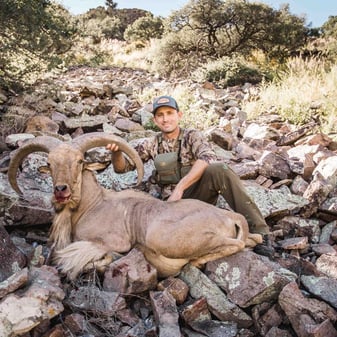
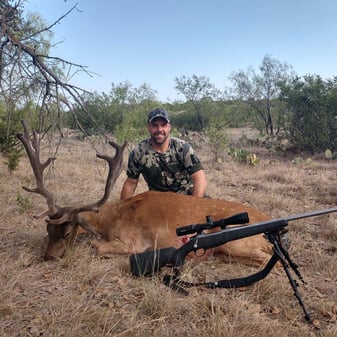
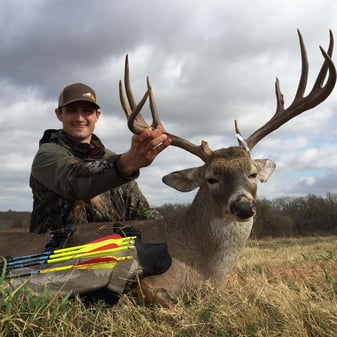
Texas – Big Mountains and Big Sheep
| UP-FRONT FEES | |
| Big Time Texas Hunts Raffle Entry Fee (Online) | $9.00 |
| State Draw Application Fee | $10.00 |
| POST DRAW FEES (IF SUCCESSFUL) | |
| Hunting License | $25.00 |
| UP-FRONT FEES | |
| Big Time Texas Hunts Raffle Entry Fee (Online) | $9.00 |
| State Draw Application Fee | $10.00 |
| POST DRAW FEES (IF SUCCESSFUL) | |
| Hunting License | $25.00 |
| TEXAS WHITE-TAILED DEER SEASON DATES | |
| Rifle (North Zone) | Nov 1, 2025 – Jan 4, 2026 |
| Rifle (South Zone) | Nov 1, 2025 – Jan 18, 2026 |
| Archery (most counties) | Sep 27 – Oct 31, 2025 |
| Muzzleloader (select counties) | Jan 5 – Jan 18, 2026 |
| Special Late (North Zone) | Jan 5 – Jan 18, 2026 |
| Special Late (South Zone) | Jan 19 – Feb 1, 2026 |
| Youth-Only (Early) | Oct 24 – Oct 26, 2025 |
| Youth-Only (Late) | Jan 5 – Jan 18, 2026 |
| TEXAS MULE DEER SEASON DATES | |
| Archery (Panhandle Zone) | Sep 27 - Nov 21, 2025 |
| Archery (Trans-Pecos Zone) | Sep 27 - Nov 27, 2025 |
| Rifle (Panhandle Zone) | Nov 22 – Dec 7, 2025 |
| Rifle (Trans-Pecos Zone) | Nov 28 – Dec 14, 2025 |
| TEXAS DESERT BIGHORN SHEEP SEASON DATES | |
| Public Draw / Translocation Areas | By permit only; dates vary (typically late fall–winter) |
| TEXAS EXOTICS SEASON DATES | |
| Aoudad (Barbary Sheep) | Year-round where legal (draw hunts may have set dates) |
| Axis / Blackbuck / Fallow | Year-round where legal (draw hunts may have set dates) |
| Nilgai (South TX & Coastal) | Year-round where legal (draw hunts may have set dates) |
Disclaimer: Texas seasons vary by county/zone, weapon, and hunt area. Some hunts are draw-only with assigned dates. Always verify current regulations with TPWD: https://tpwd.texas.gov/huntwild/hunt/
Texas allows you the opportunity to apply for high-quality hunts across the state for adults and youth hunters. Application fees are as low as $0 up to $10, and all youth hunt entries are free. The application process is simple and quite cheap. You can apply for $10 for the regular sheep drawing, and you can purchase as many chances as you would like for the Big Time Texas Hunts at $9 a piece plus a $5 processing fee. No permit fee is required for successful applicants, but they will need to purchase a Texas hunting license for $315. The application deadlines for the 2025-2026 draw hunts began August 1st with deadlines following on the 1st and 15th of every month. For 2025, the deadline to apply for Desert bighorn sheep, guided gemsbok, and guided Scimitar-horned oryx will be November 1, 2025. October 15th is the deadline to get your entries in for the Texas Grand Slam hunt package and all other raffles for the Big Time Texas Hunts. For the official rules for the Big Time Texas Hunts, visit https://tpwd.texas.gov/huntwild/hunt/public/btth/rules.phtml.
Public draw applications will only be accepted online here. The online application process is very simple and easy to use. You will first need to create an account and be assigned a customer ID number. If you have any questions or need assistance with applying for any of the guided hunt packages, you can either call Texas Parks and Wildlife at 512-389-4800 or the Huntin’ Fool Application Service at 435-865-1020.
$199 BILLED ANNUALLY
Unlimited One-On-One hunt consultations and everything you need to prep like a pro and hunt like a fool.
$48 BILLED ANNUALLY
Access our digital research tools, draw more tags, and hunt with better information.
Our members experience improved hunting opportunities as a direct result of the Huntin' Fool magazine. We are the only publication that breaks more than 20 states' hunting regulations and draw systems into bite-sized chunks for our members.
Advisor Articles from Our Magazine on Texas Application and Hunting Strategy
For more information on non-resident hunting licenses, go to https://tpwd.texas.gov/regulations/outdoor-annual/licenses/hunting-licenses-and-permits/hunting-licenses.
Preference points were instituted on September 1, 1985. Now that the application system is online, all preference points will carry over and be called Loyalty Points. Each Loyalty Point provides the applicant an additional chance in the drawing. With the Loyalty Point system, first-year applicants have the ability to draw these sought-after permits.
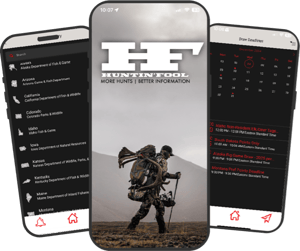
Huntin’ Fool offers a wide variety of services and resources within the hunting space, and the Huntin’ Fool App offers access to them all. Utilizing this app, you will be able to apply for hunts, plan hunts, buy hunts, and win hunts. This app is simple to use and puts the tools you need to go on great hunts right at your fingertips.
Trophy hunting, defined as killing a big game animal solely to take its antlers, hide, or other trophy parts while leaving the carcass behind, is illegal in Colorado. State law considers this a felony offense, and hunters are required to properly tag, utilize, and report their harvests. For certain species like bears, mountain lions, and bobcats, mandatory inspection and sealing of specific parts is also required. While legally licensed hunters can pursue animals for their trophy value, they must comply with all regulations that ensure the full use of the animal and prevent waste.

In Colorado, the general minimum age to hunt big game and mountain lion is 12, though youth can apply for a license at age 11 if they turn 12 before the season ends. Youth ages 12–15 must be accompanied by a qualified mentor while hunting big game, and those under 16 must also be accompanied when hunting mountain lion, turkey (with a youth license), or small game with a youth license. There is no minimum age to hunt turkey as long as hunter education requirements are met. Youth hunters under 18 may purchase reduced-cost licenses, and those meeting education requirements can also choose to buy an adult small-game license, which allows them to hunt without a mentor. All hunters born on or after January 1, 1949, must have a hunter education card.
Be careful using accordions. They are known to shorten pages, yet they come at a higher interaction cost. Accordions are great for FAQs. Here is a UX checklist:
Yes, you can hunt on your own land in Colorado, but you must still follow all applicable hunting laws. This includes having a valid hunting license for the species you're pursuing, completing hunter education if you were born on or after January 1, 1949, and purchasing a Habitat Stamp if you're between ages 18–64. Season dates, bag limits, legal hunting methods, and game management unit regulations still apply on private land. While being the landowner satisfies the permission requirement for private-land-only licenses, you must ensure your land is eligible and within the appropriate hunt unit. Hunting near public roads or highways may also be restricted.
Yes, you can hunt on BLM (Bureau of Land Management) land in Colorado, as it is generally open to public hunting. However, you must have a valid Colorado hunting license and follow all state hunting regulations, including season dates, species rules, and legal methods of take. While BLM land is open to hunting, off-trail game retrieval with motorized vehicles is usually prohibited, and specific rules or access restrictions may apply in certain areas. Hunters are advised to contact the local BLM office for up-to-date maps, regulations, and any closures before heading out.
Yes, you can hunt in National Forests in Colorado. These public lands are generally open to hunting, but you must follow all state hunting regulations, including licensing, season dates, and legal methods of take. Some areas within National Forests may have temporary closures, access restrictions, or special rules, so it’s important to contact the local Forest Service office before your hunt to get up-to-date maps and information. Always confirm the regulations for the specific Game Management Unit (GMU) where you plan to hunt, as many GMUs include portions of National Forest land.
Yes, you can hunt with a suppressor (silencer) in Colorado. Suppressors are legal to own and use for hunting, target shooting, and personal defense. As long as you legally possess a suppressor in compliance with federal regulations, you are allowed to use it while hunting in Colorado, including for big game species like elk and mule deer. Suppressors help reduce noise and recoil, and are increasingly popular among hunters for safety and comfort.
Yes, you can hunt with a crossbow in Colorado, but only under certain conditions. Crossbows are legal for hunting big game and mountain lion **during rifle or associated methods seasons**, not during archery-only seasons. To be legal, a crossbow must have a minimum 125-pound draw weight, a 14-inch draw length, a working safety, and use bolts at least 16 inches long with broadheads that are at least 7/8 inch wide and have two steel cutting edges in the same plane. Crossbows also appear to be allowed for small game, though they cannot be used for archery season big game hunts. The legality of crossbows for turkey hunting is unclear in the available sources, so it’s best to check directly with Colorado Parks and Wildlife for confirmation.
Yes, a non-hunter can accompany a hunter in Colorado under certain conditions. For youth hunters and those using apprentice certificates, a mentor must be present, but the mentor does not have to hunt. Hunters with disabilities may also be accompanied by one or more non-hunters for assistance. In general, non-hunters are allowed to accompany licensed hunters as long as they do not participate in hunting activities and all regulations are followed. However, in areas like State Wildlife Areas (SWAs), non-hunters age 16 or older may need a valid hunting/fishing license or a SWA pass to be present. Always check specific property rules with Colorado Parks and Wildlife before heading out.
Yes, you can carry a pistol while bow hunting in Colorado, but it must be for self-defense only—not for hunting or finishing wounded game. Using a firearm to dispatch an animal shot with a bow is illegal. Open carry is legal, and concealed carry is allowed with a valid Colorado permit (note that not all out-of-state permits are recognized). Handguns are exempt from some transport restrictions, but rifles and bows must be unloaded and cased when transported on off-highway vehicles. Discharging any weapon from or across a public road or within 50 feet of its centerline is prohibited. Always review current Colorado Parks and Wildlife regulations before your hunt.
Yes, you can hunt on Sundays in Colorado. There is no statewide prohibition against Sunday hunting in the regulations. As long as you're hunting during legal hours, within the designated season, and following all other rules for the species and Game Management Unit (GMU), Sunday hunting is allowed. However, some specific properties—like certain State Wildlife Areas—may have their own access or day-use restrictions, so it's important to check the regulations for the exact area where you plan to hunt. Always consult Colorado Parks and Wildlife for the most up-to-date information.
Yes, you can hunt in wilderness areas in Colorado, but you must follow specific regulations. Wilderness areas like Flat Tops, Maroon Bells–Snowmass, Mount Evans, Buffalo Peaks, and Weminuche are open to hunting, and some offer “wilderness-only” hunt options with limited licenses. These areas often restrict motorized access and may require special permits, such as camping reservations in popular zones like Maroon Bells–Snowmass. While standard hunting rules apply, additional U.S. Forest Service regulations—like equipment limits and group size—may also affect your hunt. Always check Colorado Parks and Wildlife regulations and contact the managing agency before hunting in a designated wilderness area.
Yes, you can use walkie-talkies while hunting in Colorado, but only for general communication. It is **illegal** to use radios, walkie-talkies, cell phones, or other electronic devices to relay the location of wildlife to aid in hunting or to coordinate a shot. For example, telling a partner where an animal is or advising them to shoot is prohibited. However, using walkie-talkies to stay in touch for safety, planning, or non-wildlife-related coordination is allowed. Always follow Colorado Parks and Wildlife regulations regarding electronic communication while hunting.
The general big game hunting season dates in Colorado for 2025 vary by species, method of take (archery, muzzleloader, or rifle), and Game Management Unit (GMU). The Colorado Parks and Wildlife regulations provide a framework of statewide dates, but actual hunt periods may differ depending on hunt codes and unit-specific regulations. Most archery seasons start in early September, muzzleloader seasons typically run mid-September, and rifle seasons are staggered through October and November, with some late hunts extending into December or even January. Plains rifle seasons and over-the-counter options also provide extended opportunities in designated units. Hunters must consult the CPW’s website for exact season dates for their chosen species, unit, and license type.
At Huntin' Fool, we are always looking for ways to improve our service and help out members to the very best of our abilities. We believe communication is what makes our Huntin' Fool community great!
Deer hunting season in Texas varies by county, species, and method of take, but the 2024–2025 regulatory year runs from September 1, 2024, through August 31, 2025. General seasons for white-tailed deer typically begin in early November and run through early January, while archery-only seasons start in late September or early October. Muzzleloader and late seasons may extend into January. Youth-only hunting weekends are offered before and after the general season. Mule deer seasons are generally shorter and occur in select counties. Hunters should consult the “County Listings” table in the official regulations for exact dates, bag limits, and local rules.
A general resident hunting license in Texas costs $25, while senior residents (age 65 and older) can purchase a license for $7. Youth hunting licenses (Type 169) are also $7 and are valid for the entire license year for hunters 16 years old or younger. For non-residents, a general hunting license costs $315, though a non-resident special hunting license—which covers exotic species and upland birds—costs $132. Additional endorsements may be required depending on your method of take or species hunted. For example, an archery endorsement is $7, a muzzleloader endorsement is $10, and an Annual Public Hunting Permit—required for access to designated public lands—is $48. These licenses and endorsements can be purchased online at tpwd.texas.gov or at authorized retailers throughout the state.
In Texas, a hunting license is required for individuals of all ages who wish to hunt, including youth. Hunters aged 16 or younger must obtain a Youth Hunting License (Type 169), which is valid for the entire license year—even if the hunter turns 17 during that time—and is required to participate in Youth-Only seasons. While hunting on public lands managed by Texas Parks and Wildlife, youth under 17 must still possess a hunting license but may hunt without purchasing an Annual Public Hunting Permit if supervised by a permitted adult (18 or older). Additionally, anyone under 17 using a firearm must either complete a hunter education course or be accompanied by a licensed hunter who has. Meanwhile, hunters age 17 and older must carry both a valid hunting license and a government-issued photo ID while afield.
There is no general statewide minimum acreage required to hunt in Texas; however, it is unlawful to hunt in a subdivision on lots 10 acres or less in unincorporated areas if a local ordinance prohibits it. This restriction is tied to §235.022 of the Local Government Code, so hunters should contact their local county clerk to verify if it applies in their area. Outside of that exception, the key requirement for hunting on private property is simply to have permission from the landowner or their agent, regardless of the property's size.