
Step Inside Huntin' Fool: Membership Drives
| UP-FRONT FEES | |
|---|---|
| Habitat Stamp | $25.00 |
| Application Fee - Deer | $7.00 |
| Application Fee - Antelope | $6.00 |
| Preference Point Fee - Deer | $57.00 |
| Preference Point Fee - Elk | $56.00 |
| POST DRAW FEES (IF SUCCESSFUL) | |
| Statewide Buck (Either Species) | $995.00 |
| Restricted Statewide Buck | $795.00 |
| Statewide Whitetail Buck | $750.00 |
| November Firearm Deer | $335.00 |
| Youth Whitetail | $8.00 |
| Antelope (Archery Only) | $235.00 |
| Youth Antelope (Archery Only) | $8.00 |
| UP-FRONT FEES | |
| Habitat Stamp | $25.00 |
| Application Fee - Deer | $7.00 |
| Application Fee - Antelope | $6.00 |
| Preference Point Fee - Deer | $22.00 |
| Preference Point Fee - Antelope | $21.00 |
| POST DRAW FEES (IF SUCCESSFUL) | |
| Statewide Buck (Either Species) | $173.00 |
| Restricted Statewide Buck | $128.00 |
| Statewide Whitetail Buck | $88.00 |
| November Firearm Deer | $37.00 |
| Youth Whitetail | $8.00 |
| Antelope (Archery Only) | $37.00 |
| Youth Antelope (Archery Only) | $8.00 |
| NEBRASKA DEER SEASON DATES | |
| Archery | Sep 1 – Dec 31, 2025 |
| Muzzleloader | Dec 1 – Dec 31, 2025 |
| November Firearm | Nov 15 – Nov 23, 2025 |
| Antlerless (Select Units) | Sep 1, 2025 – Jan 15, 2026 |
| Late Antlerless Firearm | Jan 1 – Jan 15, 2026 |
| NEBRASKA ANTELOPE SEASON DATES | |
| Archery | Aug 20 – Dec 31, 2025 |
| Muzzleloader | Sep 20 – Oct 5, 2025 |
| Firearm | Oct 11 – Oct 26, 2025 |
| NEBRASKA ELK SEASON DATES | |
| Archery (Bull) | Sep 1 – Oct 31, 2025 |
| Firearm (Bull) | Sep 21 – Oct 31, 2025 |
| Antlerless (select units/permits) | Aug 1, 2025 – Jan 31, 2026 |
Disclaimer: All Nebraska big game season dates are subject to change by Commission regulation or emergency orders. Unit-specific restrictions apply for elk and antlerless hunts. Always verify with Nebraska Game & Parks Commission: outdoornebraska.gov/hunt.
Nebraska has migrated some of their over-the-counter hunting permits to a draw for non-residents. Nebraska applications may be submitted online by 11:59 p.m. on the deadline day of June 1st. Over-the-counter first-come, first-served permits are available beginning on July 23rd. Draw results will be available on or before June 21st.
Party (buddy) applications are allowed with a maximum size of six. Residents and non-residents cannot apply together. The application is given the preference point number of the lowest member in the group. Nebraska will not over-allocate permits.
By Huntin' Fool
By Huntin' Fool
By Huntin' Fool

By Huntin' Fool
THE ADVISOR SERIES

Nebraska runs a pure preference point system. First and second choices are considered on an application before moving on to the next applicant during the draw. All points are lost once a permit is awarded during the draw. Permits not paid for and claimed by the successful applicant may be offered to the next applicant in the draw order. Any permits undrawn may carry over to the open purchase periods.
$199 BILLED ANNUALLY
Unlimited One-On-One hunt consultations and everything you need to prep like a pro and hunt like a fool.
$48 BILLED ANNUALLY
Access our digital research tools, draw more tags, and hunt with better information.
Our members experience improved hunting opportunities as a direct result of the Huntin' Fool magazine. We are the only publication that breaks more than 20 states' hunting regulations and draw systems into bite-sized chunks for our members.


To apply for the draw deer or antelope permits, non-residents must pay the non-refundable application fee. If successful in the draw, a habitat stamp and associated permit fee must be paid to claim the permit. Applicants who do not claim their permit will forfeit their preference points and the permit will be offered to an alternate. Permits must be claimed by July 8th or they will be forfeited.
Advisor Articles from Our Magazine on Nebraska Application and Hunting Strategy
Hunter education is required in Nebraska for all hunters ages 12-29 who hunt any game species with a firearm. They must carry proof of successful completion of the course while hunting. Bowhunter education is required in Nebraska for all hunters ages 12-29 who hunt big game with a bow or crossbow, and they must carry proof of completion of the course while hunting. Habitat stamps are required for all non-resident hunters, youth and adults.
The minimum age to hunt is 10 years old for a deer permit and 12 years old for an antelope permit. Hunters who are 15 years old or younger must be accompanied by a licensed hunter who is 19 years or older. Youth may apply for a draw unit permit at age 9 as long as they turn 10 by the start of the season. Youth age 15 may hunt with over-the-counter permits as long as they are 15 years old when they apply and are still 15 years old on September 1st.
Nebraska uses a pure preference point system for all of the draw permits offered to non-residents. All of the available permits will be drawn by those with the most points from the highest level applicant who applied to the bottom level until all permits have been awarded. Points are never purged.
The draw odds listed in this section are based on the preference point draw at a specific point level. Those applicants with more points than listed in the draw odds column would have had 100% draw odds.
Resident and non-resident youth hunters ages 10-15 are eligible for the youth whitetail deer permit and restricted deer permit. Both permits allow hunters to hunt statewide, but the non-resident restricted youth permits are not valid in the Frenchman or Platte units. Youth can use them in the archery, muzzleloader, and rifle seasons and can harvest one buck of either sex. All resident and non-resident youth deer permits are only $8. Youth ages 12-15 are eligible for youth archery antelope permits, which only cost $8. This permit allows hunters to hunt statewide during the archery antelope season dates.
During archery season, no extra authorization is required to use crossbows with a 125 lb. minimum draw weight. All broadheads must have a blade width of at least a 7/16-inch radius cutting diameter. For muzzleloader hunts, all muzzleloading rifles are legal for deer and antelope, providing they are at least .44 caliber. Magnifying and variable power scopes are legal.
Permits may not be transferred or exchanged, and they are non-refundable.
Harvest reporting is mandatory in Nebraska and can be done at a check-in location or via Telecheck. Seal numbers will be provided and must be attached to the antlers and the carcass. All deer and antelope must be checked before the carcass leaves the state. For more information about checking your animals, see the 2025 Nebraska Big Game Guide.
Most of the public land is USFS land along with other public access areas that are open to hunting in the form of walk-in hunting and state wildlife management areas. Certain restrictions apply to these lands and can be reviewed on Nebraska’s website at http://outdoornebraska.gov/wheretohunt/.
Nebraska offers a Public Access Atlas list on their website that lists more than 300 publicly owned areas. All state parks, reserves, and state refuges are closed to hunting unless otherwise posted as open.
Nebraska also offers an Open Fields and Waters Program that has over 380,000 acres of private land enrolled to walk-in hunting access across the state. Some wildlife refuges, state parks, and wildlife management areas have their own special access permits. Check out the 2025 Big Game Guide for more information.
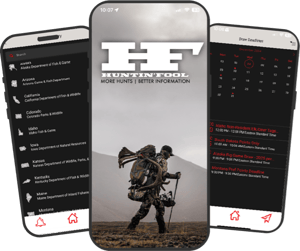
Huntin’ Fool offers a wide variety of services and resources within the hunting space, and the Huntin’ Fool App offers access to them all. Utilizing this app, you will be able to apply for hunts, plan hunts, buy hunts, and win hunts. This app is simple to use and puts the tools you need to go on great hunts right at your fingertips.
Trophy hunting, defined as killing a big game animal solely to take its antlers, hide, or other trophy parts while leaving the carcass behind, is illegal in Colorado. State law considers this a felony offense, and hunters are required to properly tag, utilize, and report their harvests. For certain species like bears, mountain lions, and bobcats, mandatory inspection and sealing of specific parts is also required. While legally licensed hunters can pursue animals for their trophy value, they must comply with all regulations that ensure the full use of the animal and prevent waste.
In Colorado, the general minimum age to hunt big game and mountain lion is 12, though youth can apply for a license at age 11 if they turn 12 before the season ends. Youth ages 12–15 must be accompanied by a qualified mentor while hunting big game, and those under 16 must also be accompanied when hunting mountain lion, turkey (with a youth license), or small game with a youth license. There is no minimum age to hunt turkey as long as hunter education requirements are met. Youth hunters under 18 may purchase reduced-cost licenses, and those meeting education requirements can also choose to buy an adult small-game license, which allows them to hunt without a mentor. All hunters born on or after January 1, 1949, must have a hunter education card.
Be careful using accordions. They are known to shorten pages, yet they come at a higher interaction cost. Accordions are great for FAQs. Here is a UX checklist:
Yes, you can hunt on your own land in Colorado, but you must still follow all applicable hunting laws. This includes having a valid hunting license for the species you're pursuing, completing hunter education if you were born on or after January 1, 1949, and purchasing a Habitat Stamp if you're between ages 18–64. Season dates, bag limits, legal hunting methods, and game management unit regulations still apply on private land. While being the landowner satisfies the permission requirement for private-land-only licenses, you must ensure your land is eligible and within the appropriate hunt unit. Hunting near public roads or highways may also be restricted.
Yes, you can hunt on BLM (Bureau of Land Management) land in Colorado, as it is generally open to public hunting. However, you must have a valid Colorado hunting license and follow all state hunting regulations, including season dates, species rules, and legal methods of take. While BLM land is open to hunting, off-trail game retrieval with motorized vehicles is usually prohibited, and specific rules or access restrictions may apply in certain areas. Hunters are advised to contact the local BLM office for up-to-date maps, regulations, and any closures before heading out.
Yes, you can hunt in National Forests in Colorado. These public lands are generally open to hunting, but you must follow all state hunting regulations, including licensing, season dates, and legal methods of take. Some areas within National Forests may have temporary closures, access restrictions, or special rules, so it’s important to contact the local Forest Service office before your hunt to get up-to-date maps and information. Always confirm the regulations for the specific Game Management Unit (GMU) where you plan to hunt, as many GMUs include portions of National Forest land.
Yes, you can hunt with a suppressor (silencer) in Colorado. Suppressors are legal to own and use for hunting, target shooting, and personal defense. As long as you legally possess a suppressor in compliance with federal regulations, you are allowed to use it while hunting in Colorado, including for big game species like elk and mule deer. Suppressors help reduce noise and recoil, and are increasingly popular among hunters for safety and comfort.
Yes, you can hunt with a crossbow in Colorado, but only under certain conditions. Crossbows are legal for hunting big game and mountain lion **during rifle or associated methods seasons**, not during archery-only seasons. To be legal, a crossbow must have a minimum 125-pound draw weight, a 14-inch draw length, a working safety, and use bolts at least 16 inches long with broadheads that are at least 7/8 inch wide and have two steel cutting edges in the same plane. Crossbows also appear to be allowed for small game, though they cannot be used for archery season big game hunts. The legality of crossbows for turkey hunting is unclear in the available sources, so it’s best to check directly with Colorado Parks and Wildlife for confirmation.
Yes, a non-hunter can accompany a hunter in Colorado under certain conditions. For youth hunters and those using apprentice certificates, a mentor must be present, but the mentor does not have to hunt. Hunters with disabilities may also be accompanied by one or more non-hunters for assistance. In general, non-hunters are allowed to accompany licensed hunters as long as they do not participate in hunting activities and all regulations are followed. However, in areas like State Wildlife Areas (SWAs), non-hunters age 16 or older may need a valid hunting/fishing license or a SWA pass to be present. Always check specific property rules with Colorado Parks and Wildlife before heading out.
Yes, you can carry a pistol while bow hunting in Colorado, but it must be for self-defense only—not for hunting or finishing wounded game. Using a firearm to dispatch an animal shot with a bow is illegal. Open carry is legal, and concealed carry is allowed with a valid Colorado permit (note that not all out-of-state permits are recognized). Handguns are exempt from some transport restrictions, but rifles and bows must be unloaded and cased when transported on off-highway vehicles. Discharging any weapon from or across a public road or within 50 feet of its centerline is prohibited. Always review current Colorado Parks and Wildlife regulations before your hunt.
Yes, you can hunt on Sundays in Colorado. There is no statewide prohibition against Sunday hunting in the regulations. As long as you're hunting during legal hours, within the designated season, and following all other rules for the species and Game Management Unit (GMU), Sunday hunting is allowed. However, some specific properties—like certain State Wildlife Areas—may have their own access or day-use restrictions, so it's important to check the regulations for the exact area where you plan to hunt. Always consult Colorado Parks and Wildlife for the most up-to-date information.
Yes, you can hunt in wilderness areas in Colorado, but you must follow specific regulations. Wilderness areas like Flat Tops, Maroon Bells–Snowmass, Mount Evans, Buffalo Peaks, and Weminuche are open to hunting, and some offer “wilderness-only” hunt options with limited licenses. These areas often restrict motorized access and may require special permits, such as camping reservations in popular zones like Maroon Bells–Snowmass. While standard hunting rules apply, additional U.S. Forest Service regulations—like equipment limits and group size—may also affect your hunt. Always check Colorado Parks and Wildlife regulations and contact the managing agency before hunting in a designated wilderness area.
Yes, you can use walkie-talkies while hunting in Colorado, but only for general communication. It is **illegal** to use radios, walkie-talkies, cell phones, or other electronic devices to relay the location of wildlife to aid in hunting or to coordinate a shot. For example, telling a partner where an animal is or advising them to shoot is prohibited. However, using walkie-talkies to stay in touch for safety, planning, or non-wildlife-related coordination is allowed. Always follow Colorado Parks and Wildlife regulations regarding electronic communication while hunting.
The general big game hunting season dates in Colorado for 2025 vary by species, method of take (archery, muzzleloader, or rifle), and Game Management Unit (GMU). The Colorado Parks and Wildlife regulations provide a framework of statewide dates, but actual hunt periods may differ depending on hunt codes and unit-specific regulations. Most archery seasons start in early September, muzzleloader seasons typically run mid-September, and rifle seasons are staggered through October and November, with some late hunts extending into December or even January. Plains rifle seasons and over-the-counter options also provide extended opportunities in designated units. Hunters must consult the CPW’s website for exact season dates for their chosen species, unit, and license type.
At Huntin' Fool, we are always looking for ways to improve our service and help out members to the very best of our abilities. We believe communication is what makes our Huntin' Fool community great!
Hunting season start dates in Nebraska for big game animals vary by species, method, and permit type for the 2025-2026 season. Archery season for deer begins on September 1, 2025, and runs through December 31. October River Antlerless Firearm Season starts October 1, followed by the Special Landowner Season on November 8 and the November Firearm Season on November 15. Muzzleloader Season begins December 1, and both the Late Antlerless Only Firearm and Late River Antlerless Seasons start January 1, 2026. Antlerless Elk and Early Antlerless Seasons begin August 1, 2025. Bull Archery Elk Season starts September 1, Firearm Season begins September 21, and the Late Antlerless Season opens November 1. Antelope Archery Season starts August 20, Muzzleloader on September 20, Firearm on October 11, and the Late Doe/Fawn Season on November 1. The Bighorn Sheep season runs from December 2–22. Permit application windows include the Landowner Draw (May 19–30), General Draw (June 2–13), Resident Purchase (starting July 9), Nonresident Purchase (starting July 23), and Remaining Permits (starting August 6). Multispecies Lottery Permit (Super Tag) applications are accepted from January 2 to July 4, and Bighorn Sheep Lottery applications from April 21 to August 1. Turkey seasons are covered in a separate guide at http://OutdoorNebraska.gov .
In Nebraska, hunters pursuing big game are required to obtain species-specific permits rather than a general hunting license. A small game hunt permit is not valid for big game, and each big game species—deer, elk, antelope, or bighorn sheep—requires its own permit. Permit costs vary based on species, residency status, permit type, and whether the hunter is applying through a draw or purchasing directly. Nonrefundable application fees apply to most permits.
For example, statewide deer permits range from $37 for residents to $995 for nonresidents, while elk permits cost $189 for residents and $542 for nonresident landowners. Antelope permits range from $43 for residents to $241 for nonresidents, and bighorn sheep lottery permits are available only to residents for a $29 application fee. Youth permits are significantly discounted, and landowner permits are offered at lower rates. In addition, hunters typically need a Nebraska Habitat Stamp, unless exempt. Preference or bonus points can be purchased in lieu of applying each year to increase draw odds in future applications.
Nebraska's 2025 big game hunting seasons vary by species and method. Deer season runs from September 1 to December 31 for archery, with additional windows for muzzleloader (Dec 1–31), firearm (Nov 15–23), special landowner (Nov 8–10), and various antlerless-only periods extending into January 2026. Permits like “season choice” and “MDCA” are valid across multiple seasons with legal weapons per open dates. Elk season includes antlerless hunts from August 1–Jan 31, bull archery from Sept 1–Oct 31, and bull firearm from Sept 21–Oct 31. Antelope hunting starts Aug 20 for archery, with muzzleloader and firearm seasons in September and October. Bighorn sheep season runs Dec 2–22. Permit application periods run from May to August, with general purchase periods opening in July. Due to recent population declines, antlerless harvest and buck permits have been reduced in some areas.
Yes, non-residents can hunt elk in Nebraska, but only under specific conditions. Non-resident landowners who own at least 1,280 acres may apply for one elk permit or purchase a preference point during the Landowner Draw Permit Application Period (May 19–30, 2025). These permits are valid across the entire management unit and cost $542, including a nonrefundable $10 application fee. Non-resident landowners receive 0.9 preference points, compared to 1 point for residents. Any forfeited landowner elk permits may become available starting August 6. Additionally, non-residents may apply for Nebraska’s Multispecies Lottery Permit (Super Tag), which is valid for one elk of either sex, one antelope, one deer, and two turkeys. One Super Tag is issued specifically for non-residents, with applications accepted from January 2 to July 4, 2025. General elk permits in Nebraska are primarily reserved for residents.
Yes, you can bow hunt during firearm season in Nebraska, provided your specific permit allows for it. "Season choice" permits, such as the Antlerless Only Season Choice (AOSC), are valid for the entire deer season and allow hunting with any legal method of the current open season, including archery during the November Firearm and Muzzleloader seasons. Limited Landowner Permits and River Antlerless Private Land Only Permits also allow bow hunting during firearm seasons. Mule Deer Conservation Area (MDCA) permits span multiple seasons as well, and legal methods follow the respective season regulations.
If bow hunting during the November Firearm or late antlerless firearm seasons, hunters must wear at least 400 square inches of hunter orange on the head, chest, and back. Archery hunters are exempt from this requirement during the Special Landowner Deer Season. Hunters may not carry a firearm while bow hunting under an archery permit, except for a handgun with a barrel no longer than 5 inches, which may not be used for taking wildlife. Always confirm that your permit explicitly allows archery equipment for the intended season.
Hunting on CRP (Conservation Reserve Program) land in Nebraska is not directly addressed in the provided sources. However, CRP land is typically privately owned and enrolled in a federal conservation program. As such, landowner permission is required to hunt on CRP land unless it is enrolled in a public access program like Nebraska’s Open Fields and Waters (OFW) Program. OFW lands, which may include CRP tracts, are identified in the Public Access Atlas and allow walk-in hunting access under specific terms. If the CRP land is not part of OFW or another access program, it is treated as private land, and hunting without explicit permission is prohibited.
Yes, you can hunt with a crossbow in Nebraska for all big game species, including deer, antelope, elk, and bighorn sheep. Crossbows must have a minimum draw weight of 125 pounds, be non-electronic, and be shoulder-fired. This applies to all big game hunting methods where archery equipment is legal. Hunters aged 12 through 29 using a crossbow must carry proof of successful completion of bowhunter education.
Certain permits, such as season choice, limited landowner, and river antlerless private land only permits, allow hunters to use the legal method of take during the current open season, which includes archery seasons where crossbows are legal. It is illegal to possess a firearm while hunting under an archery permit, except for a handgun with a barrel no longer than 5 inches, which may not be used to take wildlife unless for immediate protection of human life.