KUIU Women's Attack Pants in Solid Colors
| FEES | |
|---|---|
| Hunting License (18 and older) | $146.00* |
| Hunting License (ages 16-17) | $47.00* |
| Hunting License (under age 16) | $0.00 |
| Habitat Fee | $15.00 |
| Deer License (Refunded if Unsuccessful) | $498.00 |
| Points Only (License not Required) | $60.50 |
| *$15.00 Habitat Fee Included | |
| FEES | |
|---|---|
| Hunting License (16 and Older) | $22.00 |
| Habitat Fee (Age 16-64) | $15.00 |
| Deer License | $33.00 |
| SEASON | IOWA DEER SEASON DATES |
|---|---|
| YOUTH | September 20 – October 5, 2025 |
| EARLY ARCHERY | October 1 – December 5, 2025 |
| LATE ARCHERY | December 22, 2025 – January 10, 2026 |
| REGULAR SHOTGUN 1 | December 6 – 10, 2025 |
| REGULAR SHOTGUN 2 | December 13 – 21, 2025 |
| EARLY MUZZLELOADER | October 11 - 19, 2025 |
| LATE MUZZLELOADER | December 22, 2025 – January 10, 2026 |
| YEAR | RESULTS POSTED |
|---|---|
| 2025 | June 13 |
| 2024 | June 14 |
| 2023 | June 16 |
| 2022 | June 17 |
| 2021 | June 18 |
| 2020 | June 26 |
| 2019 | July 27 |
The 2025 Iowa non-resident deer permit application information can be downloaded at www.iowadnr.gov/Hunting/Nonresident-Hunting. Applications may be submitted May 3-June 1, 2025.
If any license quota for general deer/antlerless-only combination licenses has not been filled, the excess licenses will be sold first-come, first-served online beginning at 6 a.m. CDT on July 26th. Licenses will be sold until the quota has been filled or 10 days before the start of the respective season. To check the availability of excess or antlerless licenses, go to www.gooutdoorsiowa.com.
Applications for general deer/antlerless-only licenses will be accepted beginning at 6 a.m. CDT May 3rd through June 1st. If applications have been sold in excess of the license quota or bow quota for any zone, a drawing will be held to determine which applicants receive licenses. Hunters will be emailed regarding their draw status prior to the excess sale. Draw status will not be provided over the phone. Licenses will be mailed to successful applicants in August. Refunds of license fees will be credited back to the applicant’s card.
Hunters may apply for general deer/antlerless-only combination licenses as individuals or groups of up to 15, with one member identified as the group leader. The group leader must apply first and state they are the group leader. Members of a group must apply separately, but each member must submit the group number that is given to the group leader when applying. If there is a drawing, all members of a group will be assigned the preference point(s) of the member with the fewest points. All members of a group will be accepted or rejected together in the drawing.
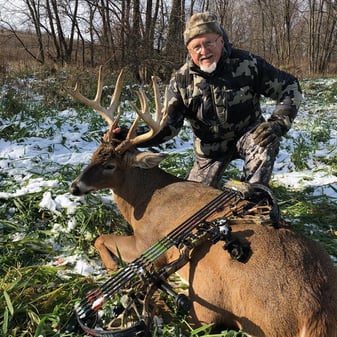
If you’re looking for an opportunity to hunt a giant whitetail buck at some point, there’s no question that Iowa should be on your bucket list. Their deer management strategy speaks for itself by consistently producing Boone and Crockett bucks throughout the state. The reality is that most of the biggest bucks will be harvested on the private land that encompasses 97% of the land area of the state. While this number may seem daunting to the self-guided hunter, there are over 400,000 acres represented on the Iowa DNR public hunting map, which is still a respectable amount to hunt. There is something for every hunter in Iowa, but it is a preference point state, so you cannot draw if you don’t have enough points.
A lot of people who fall in love with the idea of hunting Iowa realize it’s tied up with more preference points than they’d like. These units are usually booked one to three years in advance before their upcoming clients know when they are going to have enough points to draw. As a result, we advise all of our members who want to book with an outfitter to do so well in advance of the year you want to hunt. Due to the fact that most of the state is private land, the landowner or outfitter who is in charge of managing the deer hunts on the property has a huge impact on the trophy potential and enjoyment of your land. With that in mind, it’s a good idea to get an understanding of the management plan and how long it has been in place when you’re selecting an outfitter to book with. You can use our tables to confirm how many points are needed to draw the zone you want to hunt and then plan accordingly.
For the self-guided hunter, there are a plethora of great mapping tools that range from onXmaps to the state’s own excellent hunt planning website that outlines nearly 1.1 million acres of land that is accessible to the public. The size of these parcels ranges from a handful of acres to chunks of land that are more than 15,000 contiguous acres of rugged, remote country. Iowa’s hunt planning tools and harvest report data give the ambitious self-guided hunter a pretty good head start on finding a hunting area that will put you in the thick of big bucks. With late rut hitting, a little luck and a lot of patience and persistence are the three keys to big whitetail bucks.
Scouting before your hunt will come in handy the most. Having a plan before you arrive is a must. Have a few spots marked that you would like to go check. A great way to find these spots is with onX and to review maps. When looking at a map, try to identify feeding grounds, which most of the time will be ag fields. Work from them and identify creek systems and stock areas that look good for bedding areas. These areas will usually be close by. If you can find both of these on a map, then that is a great place to start your scouting. Look for travel routes that the bucks will use from bedding areas to feeding areas. Remember, most of the time deer are lazy and will travel the easiest routes from point A to B. Also, pinch points are a great way to pattern a big whitetail buck. Bucks will try to stay in the trees as long as they possibly can, so look for tree lines that extend further out into the feeding areas or big drainages that run along a field’s edge. Obviously, these are not always going to work, but looking for these types of areas on a map will often give you a leg up as some guys just drive out and start walking.
Each year, Iowa provides a buck harvest per square mile chart that is organized by county. Although this chart doesn’t necessarily correlate to trophy potential, it is an interesting tool for hunters who want to plan a hunt where they will see a lot of bucks. Unbelievably, a handful of counties actually report buck harvests in excess of two bucks per square mile. This chart, along with a lot of other great data, is available on Iowa’s website at www.iowadnr.gov/Hunting.
The great thing about Iowa is that your points do not expire or leave your account until you are successful in obtaining a tag. With that in mind, if you want to hunt in Iowa, you should build 5-6 points. Then, when you are ready to hunt, you have enough points to draw any tag.
$199 BILLED ANNUALLY
Unlimited One-On-One hunt consultations and everything you need to prep like a pro and hunt like a fool.
$48 BILLED ANNUALLY
Access our digital research tools, draw more tags, and hunt with better information.
Our members experience improved hunting opportunities as a direct result of the Huntin' Fool magazine. We are the only publication that breaks more than 20 states' hunting regulations and draw systems into bite-sized chunks for our members.


Iowa accepts Visa, MasterCard, Discover, or electronic check. Any license agent writing fees, administrative fees, internet application fees, and the mandatory $60.50 preference point fee are non-refundable. Additional fees are based on a percentage of total license cost at the time of application.
| SEASON | IOWA DEER SEASON DATES |
|---|---|
| YOUTH | September 20 – October 5, 2025 |
| EARLY ARCHERY | October 1 – December 5, 2025 |
| LATE ARCHERY | December 22, 2025 – January 10, 2026 |
| REGULAR SHOTGUN 1 | December 6 – 10, 2025 |
| REGULAR SHOTGUN 2 | December 13 – 21, 2025 |
| EARLY MUZZLELOADER | October 11 - 19, 2025 |
| LATE MUZZLELOADER | December 22, 2025 – January 10, 2026 |
Advisor Articles from Our Magazine on Iowa Application and Hunting Strategy
There is no minimum age requirement to apply or hunt in Iowa, but hunter education is required for those born after January 1, 1972. A licensed adult hunter must accompany each youth hunter under the age of 16.
Hunters who choose not to apply for general deer/antlerless-only combination licenses in 2025 may purchase one preference point that will improve their chances of getting a license in a future year. Preference points may only be purchased May 3-June 1. Preference points are $60.50 plus application fees and will be available online only. Hunters unsuccessful in the general deer/antlerless-only combination license drawing will be given one preference point and assessed a mandatory, non-refundable $60.50 preference point fee. Preference points will not accrue in a year in which you fail to apply or purchase a preference point, but you will retain any preference points previously earned. Once you receive a general deer/antlerless-only combination license, your preference point(s) will be eliminated. (You will not lose preference points by purchasing an optional antlerless-only license.) You may use your preference points in any zone or season the next time you apply. Preference points will not apply to antlerless-only licenses. The license drawing for general deer/antlerless-only combination licenses will be made from the pool of applicants with the most preference points and continue to pools with successively fewer preference points until quotas are filled or all applicants have received licenses.
The draw odds are listed as the minimum number of preference points a non-resident drew with in the 2024 draw.
There are no special seasons for non-resident youth hunters in Iowa. Non-residents under age 16 who hunt under direct supervision of their properly licensed parent or an adult do not need a hunting license.
Longbows, recurve bows, and compound bows shooting broadhead arrows are permitted. No explosive or chemical devices may be attached to the arrow or broadhead. There are no minimum draw weights for bows or minimum diameter for broadheads. Arrows must be at least 18" long.
Crossbows are not legal, except a physically handicapped person may obtain a permit from the DNR to use a crossbow. Applications are available at www.iowadnr.gov/hunting. Click on “Licenses and Laws” and then on “License Applications,” or you can visit the DNR central office or any of the district offices or call the DNR at 515-725-8200. Residents 65 and older may obtain one antlerless-only statewide crossbow deer license. Hunters may not carry a handgun while hunting under an archery tag, unless they have an unfilled transportation tag for a season that allows handguns or a valid permit to carry. Hunters may use 10, 12, 16, and 20-gauge shotguns shooting single slugs only.
Only muzzleloading rifles, muzzleloading muskets, muzzleloading pistols, and muzzleloading revolvers between .44 and .775 of an inch shooting a single projectile are permitted. Muzzleloaders equipped with electronic ignition are not allowed. In-line and disk-type muzzleloaders are allowed. Riflescopes may also be used.
Any pistol or revolver with a barrel length of at least 4" and firing straight wall or other centerfire ammunition propelling an expanding-type bullet with a maximum diameter of no less than .350 of an inch and no larger than .500 of an inch and with a published or calculated muzzle energy of 500 foot pounds or higher is legal for hunting deer during the pistol or revolver seasons. A person who is 20 years of age or younger shall not hunt deer with a pistol or revolver unless that person is accompanied by and under direct supervision throughout the hunt by a responsible person with a valid hunting license who is at least 21 years of age, with the consent of a parent, guardian, or spouse who is at least 21 years of age. The responsible person with a valid hunting license who is at least 21 years of age shall be responsible for the conveyance of the pistol or revolver while the pistol or revolver is not actively being used for hunting.
Rifles firing straight wall or other centerfire ammunition propelling an expanding-type bullet with a maximum diameter of no less than .350 of an inch and no larger than .500 of an inch and with a published or calculated muzzle energy of 500 foot pounds or higher is legal for hunting deer during the youth and disabled hunting season and first and second gun seasons.
Drawn deer tags are non-refundable and non-exchangeable. If unsuccessful, refunds for the license and tag fees will be credited back to the applicant’s credit card.
Hunters who harvest a deer or wild turkey must report the harvest to the DNR by midnight on the day after it is tagged, before taking it to a locker or taxidermist, before processing it for consumption, or before transporting it out of state, whichever occurs first. The hunter whose name is on the transportation tag is responsible for making the report. If no animal is harvested, no report is necessary.
Iowa hunting access consists primarily of state land, Habitat and Access Program (IHAP) lands, and Wildlife Management areas. All of these areas can be researched at www.iowadnr.gov/Hunting/Places-to-Hunt-Shoot.
Huntin’ Fool offers a wide variety of services and resources within the hunting space, and the Huntin’ Fool App offers access to them all. Utilizing this app, you will be able to apply for hunts, plan hunts, buy hunts, and win hunts. This app is simple to use and puts the tools you need to go on great hunts right at your fingertips.
Trophy hunting, defined as killing a big game animal solely to take its antlers, hide, or other trophy parts while leaving the carcass behind, is illegal in Colorado. State law considers this a felony offense, and hunters are required to properly tag, utilize, and report their harvests. For certain species like bears, mountain lions, and bobcats, mandatory inspection and sealing of specific parts is also required. While legally licensed hunters can pursue animals for their trophy value, they must comply with all regulations that ensure the full use of the animal and prevent waste.
In Colorado, the general minimum age to hunt big game and mountain lion is 12, though youth can apply for a license at age 11 if they turn 12 before the season ends. Youth ages 12–15 must be accompanied by a qualified mentor while hunting big game, and those under 16 must also be accompanied when hunting mountain lion, turkey (with a youth license), or small game with a youth license. There is no minimum age to hunt turkey as long as hunter education requirements are met. Youth hunters under 18 may purchase reduced-cost licenses, and those meeting education requirements can also choose to buy an adult small-game license, which allows them to hunt without a mentor. All hunters born on or after January 1, 1949, must have a hunter education card.
Be careful using accordions. They are known to shorten pages, yet they come at a higher interaction cost. Accordions are great for FAQs. Here is a UX checklist:
Yes, you can hunt on your own land in Colorado, but you must still follow all applicable hunting laws. This includes having a valid hunting license for the species you're pursuing, completing hunter education if you were born on or after January 1, 1949, and purchasing a Habitat Stamp if you're between ages 18–64. Season dates, bag limits, legal hunting methods, and game management unit regulations still apply on private land. While being the landowner satisfies the permission requirement for private-land-only licenses, you must ensure your land is eligible and within the appropriate hunt unit. Hunting near public roads or highways may also be restricted.
Yes, you can hunt on BLM (Bureau of Land Management) land in Colorado, as it is generally open to public hunting. However, you must have a valid Colorado hunting license and follow all state hunting regulations, including season dates, species rules, and legal methods of take. While BLM land is open to hunting, off-trail game retrieval with motorized vehicles is usually prohibited, and specific rules or access restrictions may apply in certain areas. Hunters are advised to contact the local BLM office for up-to-date maps, regulations, and any closures before heading out.
Yes, you can hunt in National Forests in Colorado. These public lands are generally open to hunting, but you must follow all state hunting regulations, including licensing, season dates, and legal methods of take. Some areas within National Forests may have temporary closures, access restrictions, or special rules, so it’s important to contact the local Forest Service office before your hunt to get up-to-date maps and information. Always confirm the regulations for the specific Game Management Unit (GMU) where you plan to hunt, as many GMUs include portions of National Forest land.
Yes, you can hunt with a suppressor (silencer) in Colorado. Suppressors are legal to own and use for hunting, target shooting, and personal defense. As long as you legally possess a suppressor in compliance with federal regulations, you are allowed to use it while hunting in Colorado, including for big game species like elk and mule deer. Suppressors help reduce noise and recoil, and are increasingly popular among hunters for safety and comfort.
Yes, you can hunt with a crossbow in Colorado, but only under certain conditions. Crossbows are legal for hunting big game and mountain lion **during rifle or associated methods seasons**, not during archery-only seasons. To be legal, a crossbow must have a minimum 125-pound draw weight, a 14-inch draw length, a working safety, and use bolts at least 16 inches long with broadheads that are at least 7/8 inch wide and have two steel cutting edges in the same plane. Crossbows also appear to be allowed for small game, though they cannot be used for archery season big game hunts. The legality of crossbows for turkey hunting is unclear in the available sources, so it’s best to check directly with Colorado Parks and Wildlife for confirmation.
Yes, a non-hunter can accompany a hunter in Colorado under certain conditions. For youth hunters and those using apprentice certificates, a mentor must be present, but the mentor does not have to hunt. Hunters with disabilities may also be accompanied by one or more non-hunters for assistance. In general, non-hunters are allowed to accompany licensed hunters as long as they do not participate in hunting activities and all regulations are followed. However, in areas like State Wildlife Areas (SWAs), non-hunters age 16 or older may need a valid hunting/fishing license or a SWA pass to be present. Always check specific property rules with Colorado Parks and Wildlife before heading out.
Yes, you can carry a pistol while bow hunting in Colorado, but it must be for self-defense only—not for hunting or finishing wounded game. Using a firearm to dispatch an animal shot with a bow is illegal. Open carry is legal, and concealed carry is allowed with a valid Colorado permit (note that not all out-of-state permits are recognized). Handguns are exempt from some transport restrictions, but rifles and bows must be unloaded and cased when transported on off-highway vehicles. Discharging any weapon from or across a public road or within 50 feet of its centerline is prohibited. Always review current Colorado Parks and Wildlife regulations before your hunt.
Yes, you can hunt on Sundays in Colorado. There is no statewide prohibition against Sunday hunting in the regulations. As long as you're hunting during legal hours, within the designated season, and following all other rules for the species and Game Management Unit (GMU), Sunday hunting is allowed. However, some specific properties—like certain State Wildlife Areas—may have their own access or day-use restrictions, so it's important to check the regulations for the exact area where you plan to hunt. Always consult Colorado Parks and Wildlife for the most up-to-date information.
Yes, you can hunt in wilderness areas in Colorado, but you must follow specific regulations. Wilderness areas like Flat Tops, Maroon Bells–Snowmass, Mount Evans, Buffalo Peaks, and Weminuche are open to hunting, and some offer “wilderness-only” hunt options with limited licenses. These areas often restrict motorized access and may require special permits, such as camping reservations in popular zones like Maroon Bells–Snowmass. While standard hunting rules apply, additional U.S. Forest Service regulations—like equipment limits and group size—may also affect your hunt. Always check Colorado Parks and Wildlife regulations and contact the managing agency before hunting in a designated wilderness area.
Yes, you can use walkie-talkies while hunting in Colorado, but only for general communication. It is **illegal** to use radios, walkie-talkies, cell phones, or other electronic devices to relay the location of wildlife to aid in hunting or to coordinate a shot. For example, telling a partner where an animal is or advising them to shoot is prohibited. However, using walkie-talkies to stay in touch for safety, planning, or non-wildlife-related coordination is allowed. Always follow Colorado Parks and Wildlife regulations regarding electronic communication while hunting.
The general big game hunting season dates in Colorado for 2025 vary by species, method of take (archery, muzzleloader, or rifle), and Game Management Unit (GMU). The Colorado Parks and Wildlife regulations provide a framework of statewide dates, but actual hunt periods may differ depending on hunt codes and unit-specific regulations. Most archery seasons start in early September, muzzleloader seasons typically run mid-September, and rifle seasons are staggered through October and November, with some late hunts extending into December or even January. Plains rifle seasons and over-the-counter options also provide extended opportunities in designated units. Hunters must consult the CPW’s website for exact season dates for their chosen species, unit, and license type.
In Iowa, a resident hunting license costs $22, with an option to bundle it with the habitat fee for $35. Residents can also purchase a 3-year license with habitat fee for $101, and those 65 and older can get a lifetime hunting license for $61.50. Nonresident hunting licenses cost $131 for those 18 and older, or $77 for a 5-day license; youth (16–17) pay $32. All hunters aged 16+ must also purchase a $15 wildlife habitat fee unless exempt. Additional permits and fees apply for hunting specific species: for example, deer licenses range from $15 to $33 depending on type, and turkey licenses are $28.50. Waterfowl hunters aged 16+ must also buy an $11.50 state migratory bird fee and a $29 federal duck stamp.
Deer hunting season in Iowa for 2024–2025 varies by method and eligibility. Youth and disabled hunter seasons run from September 21 to October 6. Archery season is split into two parts: October 1 to December 6, and December 23 to January 10. Early muzzleloader runs October 12–20, while late muzzleloader is December 23 to January 10. Shotgun seasons are December 7–11 (Season 1) and December 14–22 (Season 2). Nonresidents can hunt during the Holiday Season from December 24 to January 2, if quotas allow. Additional January antlerless-only seasons may occur from January 11–19, 2025, depending on county tag availability.
Yes, a non-hunter can generally accompany a hunter in Iowa without a license as long as they do not participate in the hunt. Participation includes handling firearms or ammunition, flushing or locating game, working dogs, or assisting in any way. Simply walking along and observing is not considered participation and does not require a license. However, if the non-hunter engages in any of those supportive activities, they must have a valid hunting license and any required stamps or fees.
Yes, you can hunt deer in Iowa with a rifle, but only during certain seasons and under strict regulations. Rifles must use straight-walled or other centerfire cartridges that fire an expanding-type bullet with a diameter between .350 and .500 inches and a minimum muzzle energy of 500 foot-pounds. Rifle hunting for deer is allowed during the Youth/Disabled Hunter Season, Shotgun Seasons 1 and 2, and the January Antlerless-Only seasons. During the January antlerless seasons, even smaller calibers down to .223 are permitted if they meet the energy requirement. All hunters must follow safety rules, avoid prohibited equipment (like lasers and drones), and never hunt over bait or from highways.
Yes, you can hunt deer in Iowa with a crossbow, but its use is limited to specific seasons and hunter qualifications. Crossbows are legal during the Youth/Disabled Hunter season, the Late Muzzleloader season (for residents), and the January Antlerless-Only Population Management season (in qualifying counties). They are generally not allowed during the main archery season unless the hunter is physically disabled and holds a DNR-issued permit, or if the hunter is a resident age 65 or older with a special antlerless-only crossbow license. Crossbows are not allowed during Shotgun Seasons 1 or 2, the Nonresident Holiday Season, or the Excess Tag January Antlerless-Only Season. For turkey and migratory bird hunting, crossbows are generally prohibited unless the hunter has a qualifying disability and a special permit.
At Huntin' Fool, we are always looking for ways to improve our service and help out members to the very best of our abilities. We believe communication is what makes our Huntin' Fool community great!