

Cracking the Code
When you think of hunting bison, most folks think of an iconic, once-in-a-lifetime hunting experienc...

| UP-FRONT FEES | |
| Combo Hunting & Fishing License | $160.00 |
| Youth Combo Hunting & Fishing License (Ages 10-17) | $5.00 |
| Application Fee or Bonus Point Only Fee (Per Species) | $15.00 |
| PointGuard Option (Per Species) | $10.00 |
| PointGuard+ Option (All Species) | $25.00 |
| POST DRAW FEES (IF SUCCESSFUL) | |
| Bighorn Sheep (Desert or Rocky) | $1,800.00 |
| Bison (Bull or Any) | $5,400.00 |
| Bison (Cow/Yearling) | $3,250.00 |
| Bison (Yearling) | $1,750.00 |
| Elk (Bull or Cow) | $650.00 |
| Elk (Youth Cow Only) | $50.00 |
| Deer (Draw Permit) | $300.00 |
| Deer (Archery OTC) | $300.00 |
| Deer (Youth Only) | $25.00 |
| Antelope | $550.00 |
| Javelina | $100.00 |
| Javelina (Youth Only) | $15.00 |
| Turkey | $90.00 |
| Turkey (Youth Only) | $10.00 |
| UP-FRONT FEES | |
|---|---|
| Combo Hunting & Fishing License | $57.00 |
| Youth Combo Hunting & Fishing License (Ages 10-17) | $5.00 |
| Application Fee or Bonus Point Only Fee (Per Species) | $13.00 |
| PointGuard Option (Per Species) | $10.00 |
| PointGuard+ Option (All Species) | $25.00 |
| POST DRAW FEES (IF SUCCESSFUL) | |
| Bighorn Sheep (Desert or Rocky) | $300.00 |
| Bison (Bull or Any) | $1,100.00 |
| Bison (Cow/Yearling) | $650.00 |
| Bison (Yearling) | $350.00 |
| Elk (Bull or Cow) | $135.00 |
| Elk (Youth Cow Only) | $50.00 |
| Deer (Draw Permit) | $45.00 |
| Deer (Archery OTC) | $45.00 |
| Deer (Youth Only) | $25.00 |
| Antelope | $90.00 |
| Javelina | $25.00 |
| Javelina (Youth Only) | $15.00 |
| Turkey | $25.00 |
| Turkey (Youth Only) | $10.00 |
| ARIZONA DEER SEASON DATES | |
| Archery Deer Summer OTC / Draw | Aug 22 – Sep 11, 2025 |
| Mule Deer Early Rifle | Oct 24 – Nov 2, 2025 |
| Coues Deer 1st Rifle | Oct 24 – 30, 2025 |
| Coues Deer 2nd Rifle | Nov 7 – 13, 2025 |
| Mule Deer Late Rifle | Nov 21 – 30, 2025 |
| Coues Deer 3rd Rifle | Nov 28 – Dec 7, 2025 |
| Coues Deer 4th Rifle | Dec 17 – 31, 2025 |
| Archery Deer December OTC | Dec 17 – 31, 2025 |
| Archery Deer January OTC | Jan 1 – 31, 2026 |
| ARIZONA ELK SEASON DATES | |
| Bull Elk Early Archery | Sep 12 – 25, 2025 |
| Bull Elk Early Muzzleloader/Rifle | Sep 26 – Oct 2, 2025 |
| Bull Elk Late Archery | Nov 14 – 27, 2025 |
| Bull Elk Late Muzzleloader/Rifle | Nov 28 – Dec 4, 2025 |
| ARIZONA ANTELOPE SEASON DATES | |
| Rifle | Aug 15 – Aug 31, 2025 |
| Archery | Aug 22 – Sept 4, 2025 |
| Muzzleloader | Sep 5 – Sep 11 or Sep 5 - 14, 2025 |
| ARIZONA SHEEP SEASON DATES | |
| Desert Bighorn | Nov – Dec 31, 2025 |
| Rocky Mountain Bighorn | Oct – Dec 31, 2025 |
| ARIZONA TURKEY SEASON DATES | |
| Fall Turkey (General) | Oct 3 – Oct 9, 2025 |
| Spring Turkey | Apr 25 – May 21, 2025 |
| ARIZONA BISON SEASON DATES | |
| Any Weapon Fall | Aug - Dec, 2025 (Varies by unit) |
| Any Weapon Spring | Jan - Jun, 2026 (Varies by unit) |
| ARIZONA JAVELINA SEASON DATES | |
| Archery | Jan 1 – Jan 22, 2025 |
| Handgun/Archery/Muzzleloader | Feb 6 – Feb 16, 2025 |
| Rifle | Feb 20 – Feb 26, 2025 |
| ARIZONA MOUNTAIN LION SEASON DATES | |
| Statewide (General) | Aug 23, 2025 – May 31, 2026 |
| ARIZONA BEAR SEASON DATES | |
| Spring Bear | Mar 20 – April 23, 2025 (until quota is met) |
| Fall Bear | Aug 21 – Dec 31, 2025 (until quota is met) |
Disclaimer: Arizona big game season dates vary by unit, weapon type, and permit draw. All dates are subject to change by emergency order or regulation updates. Always verify the latest hunt dates and restrictions with the Arizona Game and Fish Department before planning your hunt: https://www.azgfd.com/Hunting/Regulations/
| YEAR | ELK & ANTELOPE | FALL SHEEP, BISON & DEER | SPRING BISON, JAVELINA & TURKEY |
|---|---|---|---|
| 2025 | February 24, 11:20 a.m. (MST) | June 23, 12:10 p.m. (MST) | TBD |
| 2024 | February 26, 10:40 a.m. (MST) | June 24, 11:58 a.m. (MST) | October 18, 10:01 a.m. (MST) |
| 2023 | March 15, 10:20 a.m. (MST) | June 27, 9:57 a.m. (MST) | October 20, 10:00 a.m. (MST) |
| 2022 | March 8, 10:30 a.m. (MST) | July 5, 12:04 p.m. (MST) | October 31, 9:00 a.m. (MST) |
| 2021 | March 20 (system delays) | July 9, 10:46 a.m. (MST) | November 1, 2:00 p.m. (MST) |
| 2020 | March 5, 1:30 p.m. (MST) | July 2, 10:45 a.m. (MST) | November 5, 10:45 a.m. (MST) |
| 2019 | March 8 | July 5 | |
| 2018 | March 8 | July 6 |
| Unit | Unit Description |
|---|---|
| 2 | Northwest corner of the state. Low deer population. Mostly low elevation public land unit with pinyon/juniper canyons and open sage flats. The population is below objective, mostly due to older poor habitat and the harsh winter of 2022/2023. Very few tags are issued across the board for every hunt, which is what makes these hunts great for the hunt experience, more than the size of bucks being harvested. Very few elk hunters in the field during any of the hunts is another added benefit. Still a few great older age class bucks, but most are between 150" and 170". Fun hunt if you are looking for low hunting pressure and easy terrain to hunt. |
| 4, 14, 214, 441 | Northcentral part of the state. Big hunt area that encompasses a wide array of habitat from rolling sagebrush hills and canyons to the more timbered mountain country in the Routt national Forest. A lot of the units within this hunt area will have hiking and/or backpacking roadless areas to take advantage of. Archery and muzzleloader seasons will have a few deer harvested in units 14 and 214, but unit 4 has the lion’s share of the harvest. By the time the rifle seasons start to roll around, most deer are transitioning west into units 441 and lower in 4, which can have some private land issues. Plenty of public land to hunt in the lower elevations by way of BLM and the Jimmy Dunn WMA in 441. This unit got hit hard from the 2022/2023 winterkill, and the population is struggling, which in turn resulted in tag numbers being cut drastically. |
| 5 | Northcentral portion of the state. There are far fewer tags issued in unit 5 as access is a lot more limited with big private ranches in the heart of the unit. The far eastern side of the unit has a considerable amount of USFS land but doesn’t hold the bulk of the deer. Early on in September and October is the best time to check this side of the unit. Historically, the western side would have and influx of deer later in the year from Wyoming, but with the harsh winterkill of 2022/2023, there are not many deer moving into this area. The bulk of the deer in 5 reside in the center of the unit, which has quite a bit of private land and access can be tricky, but there is some SWA easement access to a portion of this BLM. Horses can be a huge asset getting into this portion of the unit. The later rifle hunts are by far the best hunts with an extremely limited number of tags. This unit got hit hard from 2022/2023 winterkill, and the population is struggling. Quality is still decent with a realistic chance at 170" class buck. |
| 6 | Northcentral portion of the state. This area is a combination of low elevation antelope country and steep mountain slopes with thickly-timbered canyons. Deer can be spread out and found in all portions of the unit, which can make it hard to pinpoint the best area to be in. The later second and third rifle season deer will start to move into the lower elevations where private land can become an issue. By the fourth season, some deer will even migrate into Wyoming. Great low pressure hunts with low tag numbers. Hunters better be willing to spend a good amount of time combing the unit or spend some time scouting prior to the season opener. Good potential for 160-170"+ bucks with an outside chance at something bigger. |
| 10 | Northwest corner of the state. Quality and population levels are slowly coming back, and 170-180" class bucks are becoming more common with a few bigger, mature bucks being harvested. Mostly moderate terrain that’s a good hunt for hunters who have a hard time with steep uphill and downhill climbs. Plenty of public land for a great hunt with a few big blocks of private land that will hold deer as well. Bucks can be tougher to locate during the early archery and muzzleloader seasons without some prior scouting as hot temps will have them staying in their beds during daylight hours. Great hunt for an old, mature buck during the second and third rifle seasons with very few tags. |
| 14, 16, 161 | Northcentral part of the state. Mount Zirkel Wilderness hunt. High elevation remote hunt. Mount Zirkel Wilderness area is over 160,000 acres and consists of dark timbered, steep slopes that transition into steep high alpine basins. There have been some big burn areas that have rolled through this country and created some good visibility but also some nasty deadfall ridges that can be a nightmare to navigate. Hunting pressure spreads pretty well across those units with most of the harvest coming from 161 traditionally. The high country in these units is not the greatest deer habitat, and deer are not in high densities. The opportunity to harvest a big buck is always a possibility here, but is realistically a 160-170" buck hunt. Low hunting pressure from deer hunters makes this hunt what it is, but this area will have a fair amount of archery elk hunters with overlapping season dates. |
| 21 | Western side of the state along the Utah border. Mostly public land. Lower elevation unit that is mostly made up of pinyon/juniper canyons and big sage draws. Most of the higher elevation consists of thick oak and conifer stands along the unit 30 and 22 borders. Deer will be concentrated at these elevations and around private land on the 21, 30 and 21, 22 borders, especially during early seasons. Archery and muzzleloader hunters can hunt units 21 and 30, while rifle hunters are limited to unit 21 only. There are a lot of roads that cover most of the unit, mainly in the form of oil and gas exploration roads. There are enough private land issues to warrant having onX to navigate private/public land boundaries, especially during archery and muzzleloader seasons. Huge populations of wild horses have had a negative impact on this unit, and they continue to wreak havoc on critical wildlife habitat. The later season dates will help trophy potential with more deer moving into the unit the later in November it gets. Trophy potential is still down, but there will be a few 180"+ bucks harvested with the bulk of them coming in around 160". |
| 22 | Northwest corner of the state. Big public land, low elevation unit with some private land issues scattered throughout. Mostly pinyon/juniper canyons with some sage flats mixed in. Plenty of road access throughout most of the unit. Most of the deer will be congregated along the unit 21 border and along the far south end of the unit in the higher elevation in oak canyons during the early seasons, but this is also where a lot of the private land is, so a GPS with a private land chip will help. Overall, deer population is down from years of drought and then the 2022/2023 winter that killed hundreds of deer. Mostly 150-160" bucks available with an occasional bigger buck harvested. Archery and muzzleloader hunters must apply for the multi-unit hunt that includes 11, 13, 22, 131, 311, and 231. |
| 25, 26 | Northwest part of the state just north of the Colorado River. Units have a mix of high elevation wilderness country that is only accessible by foot or horseback and low elevation pinyon/juniper hills. The early archery and muzzleloader seasons can be decent for public land hunters who are in shape as most of the high elevation is accessible to the public, but don’t expect to see a lot of deer. The early rifle season hunt can be pretty tough to locate deer within the Flat Tops Wilderness as it is not great deer habitat and deer populations are lower than adjacent units. The Flat Tops Wilderness is a mix of high alpine basins and scattered pockets of thick aspen and conifer stands. Deer will begin to migrate to lower elevations when the snow piles up, but they will typically be scattered from the top to the bottom if there is mild weather. Private land becomes more of an issue during the later rifle seasons in the lower country, especially in unit 26. 150-160" potential with a few better bucks. |
| 30 | Westcentral part of the state north of Grand Junction along the Utah border. Most of the unit is public BLM land with some private ranches along the 21 border and farm ground on the southern half. Northern half holds the bulk of the population and consists mostly of steep oak/pinyon/juniper canyons. Unit 21 is joined with this unit for the archery and muzzleloader hunts. There is a fair amount of resident deer on unit 30, but additional deer will migrate into 30 from adjacent units during the later seasons. Later seasons have been producing a better class of buck in recent years with 160-170" class bucks being available with the occasional bigger buck being harvested. CPW added a fourth season hunt in this unit in 2023. |
| 31, 32 | Westcentral part of the state north of I-70. Unit 31 has most of the public land but has some access issues getting to it due to big chunks of private land. Unit 32 is almost entirely private land tied up by oil companies, but some of that land is accessible to the public. Check with CPW to find which land is accessible to the public. Almost all of the land in both units is made up of clay breaks with oak canyons that lead up to big oak canyons with access roads on top. Hunters will want to do some homework on access to be successful in this unit, but for those who figure out the maze of public and private land, all seasons have 160-170" potential. Archery and muzzleloader seasons can be great spot and stalk hunts. The Pine Gulch fire area that burned in 2020 in unit 31 is growing back and the habitat for deer is looking great. Plan on wet, slimy roads during the late rifle hunts if rain and snow come down. |
| 35, 36, 361, 45 | Central part of the state. All units have mostly public land, but all of them have enough private land issues to warrant having a device to determine private land boundaries. This hunting area has a wide variety of terrain from high alpine basins all the way down to vast expanses of pinyon/juniper forests and sage flats with some aspen and conifer stands in between. During the early archery and muzzleloader seasons, deer will be spread out from 8,000 feet all the way up to high alpine basins, which can make these early season hunts difficult to pinpoint areas to find bucks. Unit 36 has an early rifle hunt that is conducted solely in the Eagles Nest Wilderness in September, but the high alpine basins in 36 don’t hold as much good habitat as other units to the south, so deer are fewer and farther between, which makes for a tougher hunt. Early archery, muzzleloader, and second rifle season hunters should not overlook 45. The later seasons are typically more productive on the north side of I-70 in units 35, 36, and 361. These units will have more private land to deal with. Tag numbers have fluctuated on these units, and if CPW will continue to be somewhat conservative on tag numbers the buck quality should improve. 150-170" potential with a few special bucks around. |
| 40 | Westcentral part of the state along the Utah border. Summer and some winter range are largely private land, which makes for difficult access, especially during the early season hunts. This unit is mostly a big mesa with deep oak and aspen-filled canyons that transition into pinyon/juniper canyons with some open sage flats on the northwest side of the unit. Archery and muzzleloader hunters will have a lot of private land issues to deal with, even the second and third seasons rifle hunts will be tough if snow doesn’t push them into lower BLM land. Second and third season rifle hunters will have a physically demanding hunt as access is mostly by foot or horseback into less pressured public land canyons. Quality is struggling overall, but there are always a couple great bucks that come out of 40. Buck numbers and quality have seen a reduction since implementing a fourth rifle deer season in 2021. Both the third and fourth season can produce good bucks with 160-170" class potential. |
| 41, 42, 421 | Westcentral part of the state on the northern half of the Grand Mesa. This area has a significant amount of private land in the lower elevations. Solid populations of deer scattered throughout every unit. The early archery and muzzleloader seasons can be good for public land hunters, but they must do their homework as deer can be scattered all across the higher elevations. Most of the areas have good access into higher elevations, but there are plenty of roadless areas to venture out in to get away from crowds. Mostly aspen and conifer-covered mountains with open sage and grass meadows up high. Second and third rifle seasons can also be good if snow and cold temps don’t drive the bulk of the deer down to lower private land. Access is going to be increasingly difficult during the third and fourth season hunts with the later dates and deer moving to lower elevations and onto private land. A good area for the amount of points required to draw. Hunters can expect to see 150-160" bucks with a few bigger bucks. |
| 411, 52, 521 | Westcentral part of the state on the southern half of the Grand Mesa. Mostly public land with units 52 and 411 having the big blocks of private land that will shelter some animals during the hunts. Good road access to most areas in all units but also a lot of roadless country to somewhat get away from hunting pressure in 521. Scattered populations of deer throughout most of the area, but most of the top portions of 411 and 52 are better moose habitat than deer habitat. 521 holds good deer numbers and is better during the archery and muzzleloader seasons. There are a few areas located in the Raggeds Wilderness that have alpine basins that can be good for backpack or horseback style hunters. Deer will begin to migrate into the lower elevations of 52 and 411 during the later seasons if snow piles up. Private land will make access more difficult in the lower elevations during the later rifle seasons. Older age class bucks are few and far between especially on public land in these units. Very few 170" class bucks, but there are always a handful of great bucks that get harvested every year. Plan on heavy hunting pressure from both elk and deer hunters during second and third rifle seasons. |
| 43431 | Westcentral part of the state. Most of this unit is within the Maroon Bells Wilderness and is high alpine, rough mountains. Most of the higher elevation is public land, and most of the lower elevation winter range along the northeast side is private land. The early season hunts can be good for access, but most of it is on foot or horseback and can be one of the most physically demanding backpack hunts anywhere. Populations are slowly recovering, but it continues to be tough as it has ever been to locate a good buck in this unit. The early rifle hunt in September is the best on this unit, but the high country can be crowded with archery hunters and recreational hikers. The later hunts in October and November, the deer move onto private land which can make these hunts difficult if you do not have access to private ground. CPW reduced late season rifle tags which should help congestion on public land and save a few more mature bucks. However, older age class bucks will still be hard to find. Boundary changes to this unit split the old 43 into 43 and 431. All hunts include both units. 170"+ potential during early season with late season hunts getting tougher to find big bucks on public land. |
| 44 | Small unit along the I-70 corridor with a small population of deer. Hunts on this unit are vastly different from early to late seasons. Archery and muzzleloader hunts can be very tough, mentally and physically demanding hunts. Thick, dark timber patches at higher elevations along with dense oak and aspen stands make it difficult to find bucks during this time of year. Some of the biggest bucks are those that inhabit private low lands around resorts and towns. Deer will begin to migrate if snow piles up in the higher elevations around the second season, but if the migration is delayed, this can be a frustrating hunt especially now that the second season is getting earlier every year. Third and fourth rifle hunts should be great for a chance at a trophy class buck. Good genetics and low tag numbers makes this one of the top trophy units in the state. 180-190"+ potential on later season hunts. |
| 50, 500, 501 | Central part of the state just south of Denver. 500 and 501 have the most public land with 50 having scattered private land throughout it. Good road access in the lower elevations of the units. Most of the higher elevations are within the Lost Creek Wilderness in 501, and most of 500 is high alpine roadless terrain, which gets heavy hiking and backpacking traffic, especially on the weekends. Overall, the deer population is low, so don’t expect to see loads of bucks. Archery and muzzleloader season deer can be found anywhere, but thick timber along with thick regrowth aspen stands can make it difficult to spot them at higher elevations. Most hunters converge on the old Hayman burn because of the visibility, but this has caused this area to be over hunted and the regrowth is making it harder to glass into each year. 150-160" potential with a few bigger bucks harvested every year. |
| 53 | Westcentral part of the state. Mostly USFS land with a lot of wilderness in the higher elevations. Private land can become an issue along the western side of the unit around Paonia and Crawford valleys. Archery, muzzleloader, and second season hunts can be great but can be physically demanding with some steep high mountain peaks within wilderness areas. Most of the summer range is aspen and oak stands with some scattered conifer stands around the high peaks. The best bet for glassing during the early season is catching bucks in open, high elevation basins because once they start down into the ocean of thick oak and aspen, it is very difficult to locate them. Third and fourth season hunts are good, especially if the snow starts to fall. Plan on glassing heavy oak, aspen, and pinyon/juniper cover. The potential for long shots exists as relocating a buck on the same hillside is very tough. Quality has remained strong in this unit, but it is not an easy hunt. 175-185"+ potential. onXmaps is recommended when hunting the later rifle seasons. |
| 54 | Southwest part of the state on the northern side of the Gunnison Basin. Mostly a public land unit with a few private land issues in the lower elevations. Fairly good road access to public land, but a lot of the high country is within the West Elks Wilderness, which is mostly either thickly-timbered canyons or big alpine basins above timberline. The early season hunts can be very physically demanding to access the big, open basins where a lot of the bucks tend to congregate. Once they leave the alpine basins, bucks can be difficult to locate in the timber until snow pushes them out onto more open sage hillsides. With the increased number of rifle buck tags and doe hunts added the last couple years this unit continues to slide backwards in both quality and quantity. 160-170"+ potential still exists in this unit, but the likelihood of finding a trophy buck is getting harder. |
| 55 | Southcentral portion of the state on the northside of the Gunnison Basin. Mostly public land with a little private land in the lower elevations but not enough to impact the hunt. Plenty of good access roads throughout most of the unit. Most of the unit is high elevation that is thick conifer stands that transition into open alpine basins. The archery and muzzleloader seasons can be good if you are in great physical condition and patient on the glass. Rifle seasons can be very difficult if deer hang up in the thick timber and don’t push down into the open sage and aspen basins. Expect heavy elk hunting pressure during the second and third rifle seasons. Additional doe hunts during second and third rifle seasons have made these hunts very congested and frustrating. Later rifle seasons should help with the rut and pushing deer out into more open terrain, but without snow, these late hunts can be tough to find mature bucks. 160-170" potential with a few bigger bucks being harvested if conditions are right. |
| 551 | Southwest part of the state in the far southeast corner of the Gunnison Basin. The upper elevations are mainly thick timber-covered mountains with the lower elevations having more open sage hills with scattered aspen stands. Good road access in the Forest and BLM areas with a few roadless areas up high. The early archery and muzzleloader seasons can be tough to locate bucks because of the thick timber. The late rifle seasons have typically been the better hunts on the unit, especially if the snow pushes bucks out into the open sage draws and hillsides. This unit has been struggling to produce older age class bucks in recent years. Some 160-170" class bucks, but expect to look through a lot of young bucks to find that mature one. |
| 61 | Westcentral part of the state on the southern half of the Uncompahgre Plateau. Most of the unit is thick oak canyons with scattered aspen and conifer stands at the very top of the unit and thick pinyon/juniper mesas with scattered sage flats at the lower elevations. Good road access throughout most of the unit. The deer population has been steadily declining here for the last decade or more. Although the population is well below objective, some better bucks can still be found. Archery and muzzleloader hunts can be good on public land, but it’s difficult to locate one of the better bucks without scouting or inside knowledge. During the late rifle hunts, deer will start moving towards lower terrain, where hunters might encounter some private ground access issues. 160-170" bucks available, with a chance to turn up a stud, especially on a good moisture year. |
| 62 | Westcentral part of the state on the northern half of the Uncompahgre Plateau. Mostly public land unit with good access. Most of the unit is thick oak canyons with scattered aspen and conifer stands at the very top of the unit and thick pinyon/juniper mesas with scattered sage flats at the lower elevations. A lot of roads give access to the tops of most of the mesas on the unit but very few roads in the canyon bottoms. Archery and muzzleloader hunts can be good when the bulk of the deer are in the more open aspen country on top of the plateau and are easier to locate. This side of the plateau has a lot more winter range, and some deer from unit 61 will migrate and winter on 62, which can increase your chance of finding a mature buck during the third rifle season. Population is still way below objective, but because of the thick cover there are still some good bucks. The late third rifle season could turn into a trophy hunt if deer start to pile up in the lower reseeds and pinyon/juniper. Expect a lot of hunters in the field with high deer tag numbers and over-the-counter elk tags during archery and rifle seasons. 150-160"+ potential. |
| 63 | Southwest part of the state. Some high elevation, steep, mountainous USFS land on the eastern side of the unit, but the lower elevation winter range to the west is primarily private land and landlocked public land that is not accessible to public land hunters. Good open, glassable ridges with scattered timber pockets on USFS land that transitions into primarily thick oak with a few aspen pockets and farmland down low. A lot better hunting during the archery, muzzleloader, and second rifle seasons for public land hunters, but some deer stay in the low country in and around farmland, which can be frustrating. The later dates will make the third and fourth season hunts great for hunters with private land access but frustrating for public land hunters. 160-170" potential on public land. |
| 65 | Southwest part of the state. This unit has everything from high alpine peaks to pinyon/juniper clay hills. The lower elevation is mostly private land with spotty BLM and State Wildlife Area chunks of land. Most of the public land is USFS and wilderness land. The archery, muzzleloader, and early rifle hunts can be good for hunters who are in great physical shape. Late season rifle hunters will have a tougher time locating bucks in the thick conifer and aspen stands that make up the bulk of the transition zone, and once they get to winter range, access becomes very difficult with all of the private land. The early rifle hunt on this unit is not what it once was, with few deer and very few mature bucks. It is getting tough to find mature bucks. 150-160" potential is a realistic expectation on public land in this unit with an occasional bigger buck being harvested. Later hunts have better potential if you have access to quality private land. |
| 66 | Westcentral portion of the state on the southside of the Gunnison Basin. Mostly public land in the higher elevations with some private land issues at lower elevations. Smaller population of deer than on the north side of the Gunnison Basin. Good road access in the lower drainages that gets you to trailheads to access the high elevation wilderness country. Mixture of thick live conifer and beetle kill conifer stands in the mid-elevation that transition into very steep, high alpine basins. Archery, muzzleloader, and second season rifle hunters will need to cover some country. Deer are widely scattered in higher elevations between alpine basins and beetle kill timber stands during early archery and muzzleloader hunts. Deer become a lot more concentrated during the later season hunts, which makes the third and fourth rifle seasons a lot more productive for trophy hunters. This is a limited unit for elk hunters, so there are a lot fewer hunters in the field to contend with. The later season dates have significantly reduced the quality in this unit. 160-170" class bucks with a few better. |
| 67 | Westcentral portion of the state just east of unit 66. Mostly public land that is more moderate terrain than the other units within the Gunnison Basin, but it has limited road access. It is a higher elevation unit but isn’t as steep as 66. Mostly thick conifer and aspen mountains with scattered peaks and meadows at the higher elevations. Some pockets of mule deer can also be found in the rolling sage and aspen draws during the summer months. 67 has the lowest population out of the Gunnison Basin units, and deer are more widely distributed during archery and muzzleloader seasons. Hunting for mature bucks is down in this area and largely due to the later rifle seasons and high tag numbers. Populations look good but quality bucks are nearly non-existent. 150-160" potential with the occasional bigger buck being harvested. |
| 68, 681, 682 | Southcentral part of the state. This unit has everything from low sage draws to high alpine basins. Mostly public land in the higher elevations of 68 and 681 with scattered chunks of private land in the low elevation valleys. 682 is almost entirely private land. Good road systems to access public land throughout most of 68 and 681. Archery and muzzleloader hunts can be tough if you don’t have some knowledge of the area, because of all of the thick conifer and aspen stands that make it difficult to locate deer. The later rifle hunts are usually a better hunt as deer move down to open sage ridges in the lower country. Overall, this area is set up for a better late season hunt than early season hunt. Quality is down with the later rifle dates. 150-160" potential with a few better. Early archery and muzzleloader hunters must be willing to spend plenty of time in the field to have the same type of potential. |
| 70 | Southwest part of the state. The bulk of this unit is primarily low elevation BLM land with steep high elevation mountains on the east side. Scattered private land can make access difficult on the eastern side of the unit, which is where most of the summer range is. Archery and muzzleloader hunts can be very physically demanding as you make your way around all of the private land in Telluride. Most of the summer range is made up of thick stands of oak with scattered aspen and conifer patches. Plenty of road access to most areas, especially on the BLM land. Population has rebounded some but still well below herd objective. Deer tend to migrate to the west across Highway 141 by the third rifle season, regardless of weather conditions, but snow will definitely make it a better hunt to locate rutting bucks. |
| 71, 711 | Southwest part of the state. 71 is almost all higher elevation, mountainous canyons with a mix of thick oak, aspen, and conifer stands. 711 is more moderate terrain and is more oak/pinyon/juniper habitat that gets into heavy agriculture land along the southwest border. There are good road systems throughout both units with some big drainages in 71 where you can get away from people. Population is still under objective but seems to be holding steady. Deer are scattered throughout both units, with the majority of them during the early archery and muzzleloader hunts being found in unit 71 or the agricultural fields in 711. Most of the deer migrate to the west and southwest toward the agriculture fields, but deer tend to hang up in the thick oak canyons until snow pushes them out. Expect to work hard and spend a lot of time on the glass to be successful, especially during the late rifle seasons. 150-160" class bucks are realistic with a few bigger bucks if a hunter is persistent and lucky. |
| 74 | Southwest part of the state. Almost all of this unit is above 8,000’ and up to 13,000’ peaks in the northern end of the unit. A lot of this unit is made up of steep, roadless canyons and mountainous peaks, which can be very physically demanding. A few roads traverse the bottoms and tops of the canyons. The archery, muzzleloader, and early September rifle seasons are the best hunts by far on this unit. The high country is a lot more open and glassable, especially in the high alpine basins if you can figure out which ones to look in. Early rifle season boundaries are defined as portions of unit 74 above 11,000 feet. The later rifle seasons are a lot harder hunts with thick country, and a lot of deer migrate into adjacent units because of the overall high elevation winter range. 160-170"+ potential, with the occasional trophy harvested, especially during the early seasons. |
| 76 | Southwest part of the state. All of this unit is high elevation with a lot of it consisting of alpine basins and thick conifer stands. Half of this unit is within the Weminuche Wilderness that is only accessible by foot or horseback. Most of the deer will migrate out of 76 into adjacent units during the rifle seasons. The best hunts on this unit were typically archery and muzzleloader hunts when the bulk of the deer were still in open alpine basins, but more deer are taking refuge in thick beetle kill stands. During later rifle seasons, deer move east and tend to congregate around Creede and Highway 149 to South Fork. Low densities of deer, so hunters will need to look over a lot of country or have some intimate knowledge to find one of the great bucks that 76 is capable of producing. Hunters will need to be in great physical shape in order to have fun on this hunt. 170"+ potential, but don’t expect to see a lot of big bucks or deer in general. |
| 79, 791 | Southwest part of the state. 79 is a combination of high elevation heavily timbered country from 11,000’ down to open sage ridges that transcend down into private land agriculture fields along the Rio Grande River. 791 is entirely made up of private land ag fields. This population is doing well and is at or slightly above objective. Earlier seasons have fewer deer available than later seasons as most of these units are lower elevation winter range that attract deer from adjoining units the later in the year it gets. Mostly public USFS land with good road access to a lot of the country in 79. 160-170"+ potential, especially during later rifle seasons. |
| 80, 81 | Southcentral part of the state along the New Mexico border. Mostly high elevation terrain with a mix of alpine basins and thick conifer-covered canyons. There are a few more roads in 80 than 81, but both have a significant amount of roadless canyons that are foot or horseback only. There is a good amount of private land at the lower elevations that can limit access, but typically, the deer won’t make it down to that elevation until the fourth season hunt. Population is a slightly over objective since CPW lowered the objective in 2018, but CPW is looking at raising it back up. Archery and muzzleloader hunts have potential to be good for mature bucks, and with archery elk tags being limited, hunting pressure should not be as crowded as years past. The later rifle dates should make for some better hunts with better trophy potential. 150-160" potential with a few bigger bucks roaming the country. |
| 82, 86, 861 | Southcentral part of the state. Early above timberline rifle hunt in the Sangre De Cristo Mountains. Very steep, high alpine basins make up the terrain on this hunt. Lower population of deer at this elevation, so hunters will need to be in phenomenal physical shape to capitalize on this hunt and find a mature buck. Heavy scouting is recommended to locate a mature buck. The early hunt in this unit may be the best potential for a big buck out of all the early rifle hunts, but it is also one of the most physically and mentally challenging as well. Decent trail systems in the canyon bottoms for backpack or horseback travel. Very physically demanding hunt with 170"+ potential. |
| 142 | Southeast part of the state within the Colorado Plains. This unit is entirely within the Pinyon Canyon Military Range, which has travel restrictions within the unit and requires an access permit. Flat desert type terrain with pinyon/juniper-covered hills and canyons. Good road access to most areas that will require short day hikes to hunt them. Lower population of mule deer that is more strictly managed than other Plains units. The archery hunt is the best as it has the most liberal season dates and allows hunting the entire month of November during the rut. Overall, a fun hunt for big, mature bucks with the occasional big high scoring buck. This makes the rifle hunt a little overblown as far as the amount of points it takes to draw and is a little late for rutting activity. 170-180"+ potential. |
| 201 | Northwest corner of the state. Low deer population. Small public land unit with a few low elevation mountains. Moderate terrain and good glassing unit for spot and stalk hunting. Hunters will have to work hard and glass a lot of country to find one of the bigger bucks that have historically lived here. The best part of the hunts on this unit is the low hunting pressure, but 170"+ bucks are very tough to find. Not the trophy hunt it used to be for the number of points it takes to draw. |

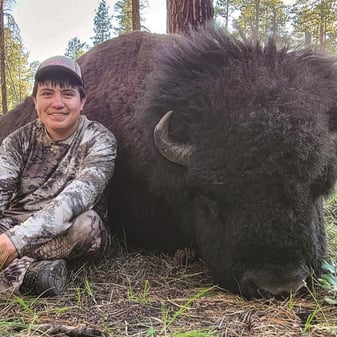
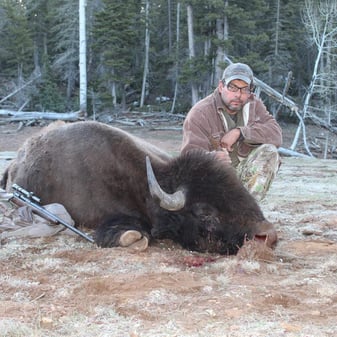
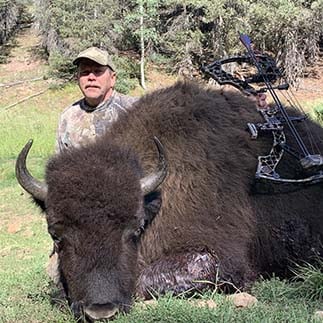
Arizona offers hunters an opportunity to hunt three separate herds. The House Rock and Raymond herds are high fenced. The Kaibab Plateau herd is free ranging. The Kaibab Plateau herd stems from the House Rock herd. They released some from the high fence to free range. Over the years, hunting pressure pushed them up onto the Plateau and even more pressure moved them into the Grand Canyon National Park. The Raymond herd is located within the Raymond Wildlife Area in 5A and 5B. Out of the five bison hunts offered in 5A/5B, two are designated bull bison and each only has one tag, which makes non-residents ineligible to draw them. The other three hunts are for designated yearling bison and each hunt has two tags, meaning non-residents will be eligible to apply and draw a tag. These hunts are managed for 100% success and are physically easy. Because of this, draw odds are extremely low as many applicants apply.
The Arizona big game online application deadline for sheep, fall bison, and deer is 11:59 p.m. (Arizona Time) on October 7, 2025.
Our magazine, which is available in print and online, has everything in one location - application info, draw details and odds, fees, hunter requirements, point structure, age restrictions, youth information, weapon restrictions, other tag opportunites, hunt planning, and much more. If you would like access to all of our research, join today!

For all season dates, tag numbers, and a complete list of hunts available, look in the 2026 Spring Turkey, Javelina, Bison, and Bear Hunt Draw Information booklet. If you have any questions regarding available hunts for Gould’s turkey in Arizona or Mexico, you can always call us.
The House Rock herd is located along the east edge of the Kaibab Plateau within the House Rock Wildlife area and north of the Grand Canyon. They have increased the hunts up to two this year, but each hunt only has one tag meaning non-residents will not be eligible to draw.
The Kaibab Plateau herd has only two hunts this year – the early spring hunt and the second hunt. The early spring hunt has the longest season, and the second hunt runs for three weeks and gives hunters a good amount of time to harvest, which they need to be successful. Both hunts are for bull bison only. The first hunt had better harvest success, which is typically the case with the length of the season, except for some years when the weather is hot and dry during the second hunt and bison tend to come out of the park on a more regular basis. Their success rebounded last year which is a result of trimming the hunts back to only two during the spring and having a little break in between seasons. This is a positive for the bison hunters and nice to see as these bison hunts are very expensive and difficult to draw as well. These hunts are valid in areas 12A (excluding the northeast portion of House Rock Wildlife Area), 12B, and 13A.
The National Park Service estimates the Kaibab Plateau herd on the North Rim to be around 200 animals, which is drastically down from some estimates that had the herd at near 900 only five to six years ago. The herd spends most of its time within the confines of Grand Canyon National Park. Like the herds in Montana and Wyoming, these bison have figured out exactly where the park’s boundary is and have come to be extremely wary of leaving its safety. To entice the bison out, salt licks are placed along the outside of the park’s boundary. Rather than still hunting and risking bumping the bison back into the park and further enticing them to stay there, AZGFD recommends sitting along the boundary as the most effective hunting. This method of hunting is not for everyone, and you will need to be mentally prepared to sit for 15 to 16 hours a day for as long as it takes to provide yourself an opportunity at punching your tag. These hunts will put even the most patient hunter to the test with the average number of days hunted per harvest typically around 20 days.
For self-guided hunters, this hunt becomes even more challenging as an outfitter in the area will have blinds set up on each of the best salt locations. In instances where more than one person wants to hunt the same salt and/or waterhole, AZGFD promotes a first-come, first-served policy regardless of who has a tree stand or blind already set up. Even so, confrontations can and do arise as competition for the best areas can be high. To hunt one of the better spots, you will need to be in a stand well before shooting light or never leave the area all together by spending the night in the blind.

$199 BILLED ANNUALLY
Unlimited One-On-One hunt consultations and everything you need to prep like a pro and hunt like a fool.

$48 BILLED ANNUALLY
Access our digital research tools, draw more tags, and hunt with better information.
Our members experience improved hunting opportunities as a direct result of the Huntin' Fool magazine. We are the only publication that breaks more than 20 states' hunting regulations and draw systems into bite-sized chunks for our members.
Advisor Articles from Our Magazine on Arizona Application and Hunting Strategy


Huntin’ Fool offers a wide variety of services and resources within the hunting space, and the Huntin’ Fool App offers access to them all. Utilizing this app, you will be able to apply for hunts, plan hunts, buy hunts, and win hunts. This app is simple to use and puts the tools you need to go on great hunts right at your fingertips.


At Huntin' Fool, we are always looking for ways to improve our service and help out members to the very best of our abilities. We believe communication is what makes our Huntin' Fool community great!