The red and white Super Cub came to life. After waiting for an incoming plane to land, the throttle dropped and we quickly lifted off the runway in Cold Bay, Alaska. The
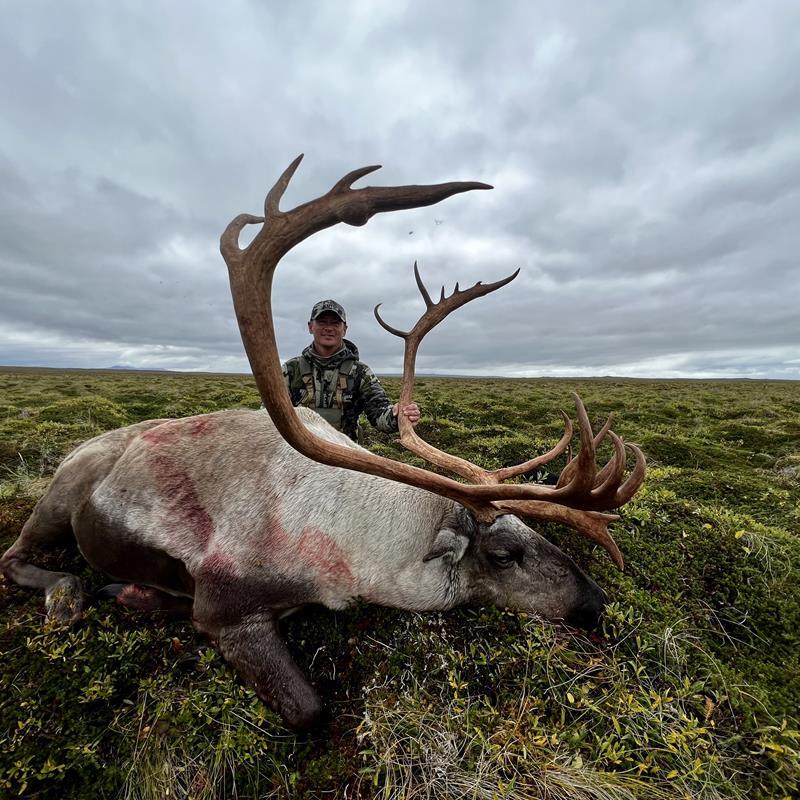
temperature was in the low 40s, it was raining, and the wind was around 30 mph. I was a little nervous due to the weather, but I was already having the time of my life. During the flight, the clouds broke and the sun began to shine. The flight had me in awe. On one side was Bristol Bay, and on the other side, I saw the volcano peaks of Pavlof and Pavlof Sister. We landed on a short runway that was on a hill above camp. I stepped off the Super Cub, and my eyes were wide. I had a huge smile. I had the excitement of adventure coursing through my body. My caribou hunt was about to begin, but how did I get to this point?The wheels were set in motion during the fall 2022 after a successful self-guided Wyoming antelope hunt with two friends. We have spent many hunting adventures together in Wyoming, Montana, and our home state of Michigan, but for the 2023 hunting season, our availability wouldn’t line up. I was left in a dilemma, go alone or stay home.One day while on Instagram, I saw pictures from a friend who was working for Dwayne Magnusson of Magnusson Alaskan Outfitters (MAO). I reached out to my friend, Eric Deneault, who is a guide in Montana and works as a packer until he gets his guide license in Alaska. He shared his experience packing for MAO, the amazing location, and the fantastic animals they have in Cold Bay, Alaska. After a short talk with Dwayne, I was signing my contract and preparing for the grueling 11-month wait for my hunt. I was going, but I also tried to get my friends to go on the hunt with me, but to no avail. I was going alone.The first day of the hunt, we woke up to a driving rain with 30 mph winds. By 9 a.m., the rain was letting up, so we headed out into the tundra. Visibility was poor, but every now and then we would be able to see out into the distance. Around noon, my guide, Matt Nielsen, had Eric head back to camp to greet the second hunter, Doug Wilson, in camp. Alaska rules prohibit hunting on the same day, so Doug and Eric stayed in camp while Matt and I hunted hard with a lot of glassing, rain, and wind. We had some weather breaks, and the tundra revealed its vastness and beauty. A few times, I saw bulls and asked if it was a good one. Matt said, “You will know a good one when you see one.” At the end of the first day, we saw 60+ caribou but nothing we wanted to pursue. When we reached camp, I met Doug and he shared stories of his many adventures during dinner. We went to sleep with full bellies and the anticipation of the hunt tomorrow.On day two, Matt, Eric, Doug, and I were in the tundra at first light. It was overcast in the 40s, and there was a hint of weather creeping up on us. This was the first time I had been in camp by myself and with another hunter I had just met, so we needed to discuss shooting order. Doug and I had a conversation on who would be first shooter. He said I needed to shoot first since I had been in the field a day earlier than him. Doug asked if I passed and he wanted to shoot if I would care. Absolutely not! I explained to him that if we came to that situation, I would be happy if he got what he was after. Communication was key, and Doug made it easy to have the discussion. Doug had been in many camps before, and he only needed this Barren-ground caribou to complete his North America 29, which made it even more special that he told me to shoot first.We hiked back to a glassing spot that we were sitting on the day before and set up to search the area. To our surprise, we saw four other hunters in the area, but these hunters were wolves! We watched them effortlessly gliding across the tundra in search of their next meal. They disappeared behind some hills, but shortly after, they were coming back. We gathered our gear and moved as quickly as we could to a location where we thought we could cut them off, but we never got a shot. We headed back to the glassing spot.We were glassing a lot of caribou that were off in the distance, and after a while, Matt and Eric started to discuss what appeared to be a big one. Our group discussed the potential, and we decided that we needed to close the distance because we could not tell if it was big. With every mile we hiked, he looked bigger and bigger. When we were two miles away, Matt and Eric confirmed he was a good representation of the species. I thought he looked huge. The bull was in a herd of 10-15 bulls, cows, and calves. He was the dominant bull and was significantly bigger than the other bulls in the group. We continued to hike behind small rolling hills that gave us the ability to stay out of sight until we reached one-quarter mile from the bull. Eric and Doug set up on the last hill to watch Matt and me stalk in on the herd. The tundra was flat from the hill to the herd, and we were a quarter of a mile from the caribou but had no other approach. It had to be a direct approach.Matt said, “For caribou, slow is safe and fast is dangerous. Predators move fast.” We walked at a slow pace and didn’t make any sudden moves. In my head, I kept telling myself that if this stalk didn’t work out, I was only on day two of the hunt and I had six more days in the field. I didn’t need any additional days as Matt did a great job of getting us into position. A little after 5 p.m., we were celebrating the hunt. We took pictures, shared high fives, and started caping and processing the bull. We were in for a long night. The hike back to camp started in the dark with the rain starting an hour later. Walking in the tundra at night was an experience. The dark doesn’t allow you to see very far, and the tundra has zero points of reference other than our occasional footstep from the stalk. We had to rely on our GPS to navigate back to camp. At 2:30 a.m., we walked into camp soaking wet, ready for dinner and bed.The next morning, Erik and I hiked back to get the rest of the meat, the cape, and antlers. It was the most beautiful day. The weather subsided, the clouds disappeared, and the sun was shining. My GPS recorded a little over 15 miles on that day.Dwayne flew me back to Cold Bay on Saturday, and there were no flights into Anchorage until Monday. From Anchorage, I could continue on my trip home to Michigan. I stayed at the Cold Bay Lodge and met other hunters who were successful on their hunts with MAO. The next day, a group of us went fishing and I caught silvers, dolly vardens, and a native steelhead.The next morning, I awoke to volcanic ash everywhere in the town. The Shishaldin volcano was erupting, and the wind was in the perfect direction to distribute ash on Cold Bay. By 11 a.m., I found out all flights were grounded. This was another opportunity to fish, and this time, we also hunted ptarmigan. I was delayed from my return home for two days, but I was able to meet a group of great guys and we made a lot of memories. I came to Cold Bay for a caribou hunt but also had a second adventure because of the delay.I took a chance on going alone. That decision gave me an adventure I will never forget. This hunt reminded me that we only have so many fall hunts in our lifetime. and if I didn’t go alone, I would still be dreaming of going instead of reminiscing on the experience.